Transform your health with a personalized Mediterranean meal plan.
Try no.Diet today
Mediterranean Diet Granola Bars: A Guide to Healthy, On-the-Go Snacking
By: Healthtime Editorial
Fact checked by: QA Team
Updated on: October 9, 2026
1
211
8 min
In this article
- What Makes a Granola Bar Mediterranean-Friendly?
- Store-Bought vs. Homemade: Key Differences at a Glance
- A Doctor’s Blueprint for Homemade Mediterranean Bars
- Clinical Insights: Why These Bars Support Metabolic Health
- Storage and Serving Tips
- FAQ
- Conclusion
Finding a convenient snack that genuinely aligns with heart-healthy principles can often feel like a frustrating treasure hunt. Most options on the shelf are ultra-processed sweets in disguise, leaving you with a sugar crash rather than sustained energy.
The good news is that Mediterranean diet granola bars exist, and they are easier to identify or make than you might think. This guide explores exactly what sets these nutrient-dense bars apart and how to incorporate them into your routine.
Whether you choose to buy them or bake them, understanding the ingredient profile is the first step toward better snacking.
What Makes a Granola Bar Mediterranean-Friendly?
Standard granola bars are often disguised candy bars, loaded with high-fructose corn syrup and inflammatory oils that contradict Mediterranean principles. A compliant bar focuses on whole food ingredients that provide sustained energy through fiber and healthy fats rather than empty calorie spikes.
By prioritizing nutrient density over shelf stability, these bars become a functional part of your diet rather than just a treat.
Swapping Saturated Fats for MUFAs
The most significant nutritional shift involves moving away from saturated fats like butter and palm oil. Instead, Mediterranean-friendly recipes rely on monounsaturated fatty acids (MUFAs) found in extra virgin olive oil (EVOO) or tahini.
These binders support cardiovascular health by helping to lower LDL cholesterol levels. EVOO is particularly valuable because it contains oleocanthal, a compound with potent anti-inflammatory properties similar to ibuprofen.
Selecting High-Fiber Whole Grains
The base of any good bar lies in its grains, specifically old-fashioned rolled oats. Rolled oats are superior to quick oats because they are digested more slowly, offering better glycemic control and sustained energy release.
To further boost the nutritional profile, I always recommend including flax, chia, or hemp seeds. These additions significantly increase the omega-3 content and help reach a target of at least 3g of fiber per bar.
Moderating Natural Sweeteners
Refined white sugar is replaced with alternatives like local honey, pure maple syrup, or date paste. These natural sweeteners offer trace minerals and antioxidants that processed sugars completely lack.
However, it is crucial to remember that sugar is still sugar metabolically. Even natural sources affect blood glucose, so they should be consumed sparingly within your personal carbohydrate limits.
Eliminating Inflammatory Additives
A true Mediterranean snack avoids the 'red flag' ingredients common in mass-produced bars, such as soy protein isolate, artificial flavors, and palm oil. The diet emphasizes 'whole food' proximity, meaning ingredients should look like they came from nature.
I suggest avoiding any bar with an ingredient list longer than 8–10 items. Once you understand the necessary ingredients, you can easily distinguish between a healthy choice and a sugar bomb.
Store-Bought vs. Homemade: Key Differences at a Glance
While convenient, many store-bought options sacrifice nutritional integrity for shelf life, whereas homemade versions give you full control over the quality of oils and sweetness levels. Here is a quick comparison to help you decide which route fits your lifestyle.
Understanding these trade-offs ensures you aren't accidentally consuming inflammatory ingredients during a busy day.
| Feature | Typical Store Brand | Mediterranean Style |
|---|---|---|
Primary Fat Source | Palm Oil / Canola Oil | Olive Oil / Nuts |
Sweetener | Corn Syrup / Cane Sugar | Honey / Dates |
Protein Source | Soy Isolates | Whole Nuts / Seeds |
Satiety Level | Low (Sugar crash) | High (Fiber rich) |
Reading Labels for Hidden Sugars
If buying pre-made bars is necessary, scan the label for sugar aliases like 'brown rice syrup', 'cane crystals', or 'tapioca syrup'. These are often used to split sugar content across multiple ingredients so they appear lower on the list.
For those managing complex dietary needs, digital tools can simplify this vetting process significantly. I have found that using a resource like no.Diet helps clarify exactly what fits into a personalized plan by filtering out unwanted additives automatically.
Always verify certification labels if you have specific restrictions like celiac disease. Relying solely on the ingredient list can be risky due to potential cross-contamination in manufacturing facilities.
If you cannot find a store-bought bar that meets these high standards, making them at home is surprisingly simple. This approach allows for endless customization and ensures absolute ingredient transparency.
A Doctor’s Blueprint for Homemade Mediterranean Bars
Creating your own bars allows you to incorporate potent anti-inflammatory ingredients like turmeric or cinnamon while controlling the texture. This flexible blueprint works for both baked (crunchy) and no-bake (chewy) varieties.
The key is understanding the functional role of each component. Following these steps guarantees a bar that holds together without needing excess sugar.
Step 1: Balance the Dry Ratio
Start with the ideal ratio of oats to mix-ins, which is typically 2 cups of oats to 1 cup of nuts and seeds. A mix of walnuts and pistachios offers a robust heart-health profile due to their unique fatty acid composition.
I recommend toasting the oats briefly in the oven for 5–10 minutes before mixing. This simple step enhances the nutty flavor significantly without adding a grain of salt.
Step 2: Emulsify the Oil-Based Binder
Whisk extra virgin olive oil with your chosen liquid sweetener, such as honey, and a creamy element like tahini or almond butter. Emulsifying these wet ingredients creates a thick sauce that ensures every single oat is coated evenly.
Use a specific ratio of 1/2 cup liquid binder for every 3 cups of total dry ingredients. This proportion provides enough moisture to bind the bar without making it greasy.
Step 3: Infuse with Anti-Inflammatory Spices
Utilize Mediterranean spices to boost health benefits without adding calories or sugar. Cinnamon is excellent for blood sugar regulation, while cardamom adds a sophisticated aromatic note.
Adding fresh zest from a lemon or orange can cut through the richness of the nuts. This brightens the flavor profile and adds a small dose of vitamin C.
Step 4: Compress for Structural Integrity
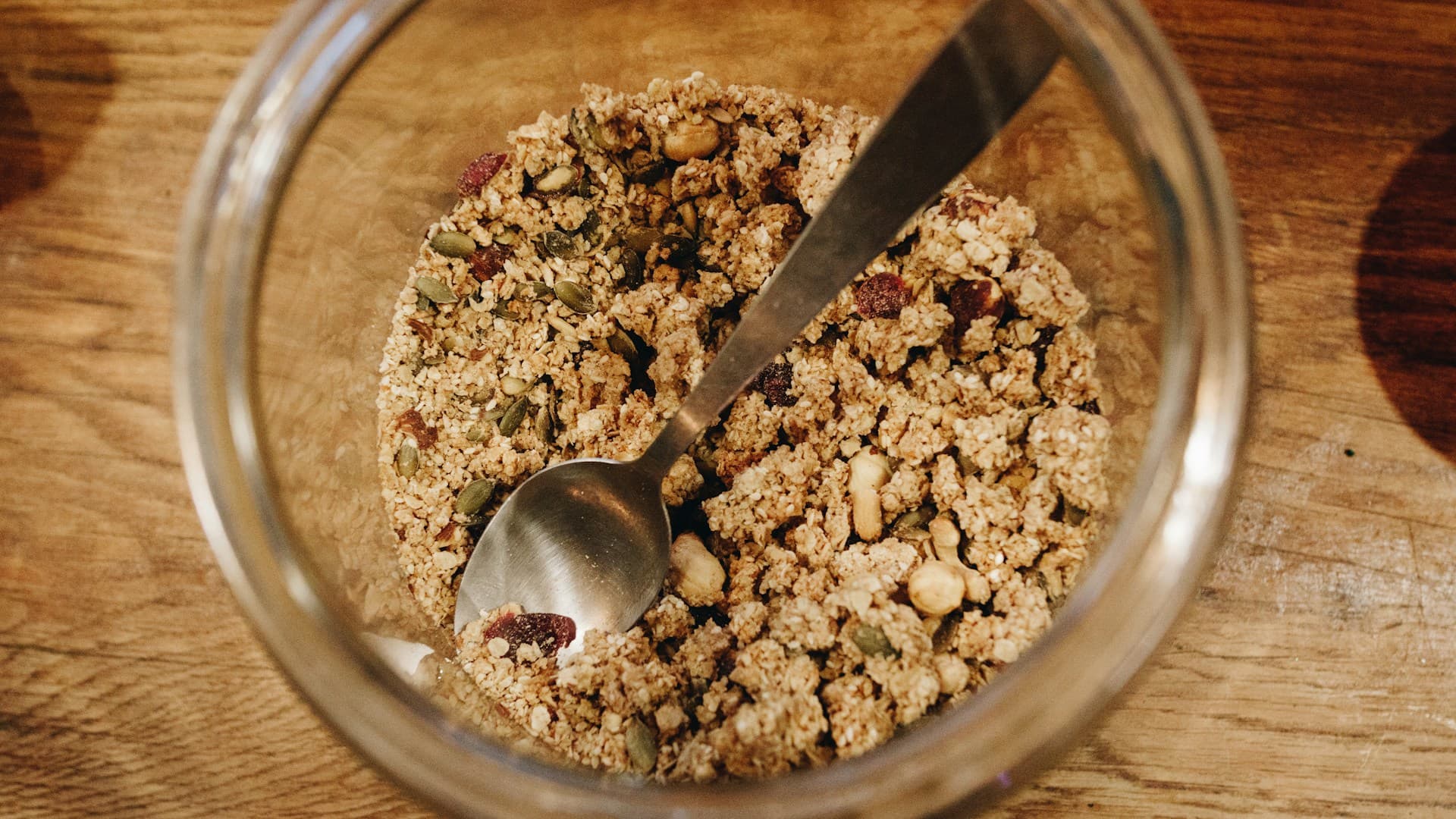
Combine the wet and dry mixtures thoroughly until no dry oats are visible. Transfer the mixture to a lined pan and press it *very* firmly using the flat bottom of a glass or measuring cup.
Loose packing is the number one reason homemade bars crumble upon slicing. Applying significant pressure removes air pockets and creates a solid, cohesive slab.
Step 5: Control Texture via Temperature
For a crunchy texture, bake at a low temperature of 150°C (300°F) for about 20–25 minutes. If you prefer a chewy energy bar, simply chill the pressed mixture in the fridge for at least two hours.
Regardless of the method, allow the bars to cool or set for at least 1 hour before slicing. Cutting them while warm will almost certainly result in breakage.
Clinical Insights: Why These Bars Support Metabolic Health
Snacking often gets a bad reputation, but when composed of the right macronutrients, it can actually stabilize metabolism. Mediterranean granola bars are designed to provide satiety that prevents overeating later in the day.
Understanding the physiological impact of these ingredients helps explain why they are superior to standard snacks. It is about fueling your body, not just filling a gap.
Tools for Personalized Nutrition
Maintaining a balanced diet requires consistency and planning, which can be challenging to manage alone. I often suggest tools like no.Diet to help structure meal plans that include healthy snacks like these without exceeding daily caloric needs.
These platforms can calculate your specific macro requirements, ensuring your homemade bars fit perfectly into your broader health goals. It removes the guesswork from portion control and frequency.
Stabilizing Blood Glucose
The soluble fiber in oats and nuts slows down digestion, leading to a gradual release of glucose into the bloodstream. This contrasts sharply with the rapid spike and subsequent crash experienced after eating snacks made with refined flour.
This slow glucose release helps maintain mental focus and consistent energy levels. It effectively prevents the dreaded '3 PM slump' that often drives people toward vending machines.
Leveraging Protein for Satiety
Walnuts, almonds, and seeds contribute a significant amount of plant-based protein to these bars. While they aren't high-protein supplements, a typical bar contains about 5–8g of protein.
When combined with healthy fats, this protein signals fullness to the brain much more effectively than carbohydrates alone. This synergy is key to feeling satisfied for hours after a relatively small snack.
Reducing Systemic Inflammation
The specific ingredients used, such as the polyphenols in olive oil and omega-3s in walnuts, provide cumulative anti-inflammatory benefits. Reducing systemic inflammation is a core pillar of the Mediterranean lifestyle.
Consuming these nutrients regularly supports long-term joint and heart health. It turns a daily snack into a proactive health measure.
Storage and Serving Tips
Because these bars lack artificial preservatives, they require slightly more care than commercial options. Proper storage ensures they remain crisp or chewy rather than becoming stale or soggy.
Treating them like fresh food rather than a non-perishable item will yield the best eating experience.
Managing Shelf Life and Texture
Baked bars can generally stay at room temperature in an airtight container for about 5–7 days. No-bake versions, however, usually require refrigeration to hold their shape firmly.
It is worth noting that olive oil-based bars naturally stay moist longer than butter-based ones due to the fat structure. If they become too soft, a quick stint in the fridge will firm them up.
Freezing for Long-Term Storage
For the ultimate convenience, wrap individual bars in parchment paper and store them in the freezer. This creates a 'grab-and-go' snack that thaws in about 20 minutes at room temperature.
This is an excellent strategy for portion control and meal prepping. You can make a large batch once a month and have healthy snacks available daily.
Pairing for a Complete Macro Profile
To turn a snack into a more substantial mini-meal, crumble a bar over Greek yogurt. This combination increases the protein volume significantly, aiming for a total of 15–20g.
Alternatively, serving it alongside a piece of fruit adds volume and hydration. These pairings ensure you are getting a broad spectrum of nutrients.
FAQ
Can I eat granola bars on the Mediterranean diet?
Yes, provided they are made with compliant ingredients like whole grains, nuts, seeds, and healthy oils like olive oil. You should avoid bars with highly processed sugars, additives, or saturated fats.
What is the best binder for granola bars without butter?
A combination of a liquid sweetener (like honey or maple syrup) and a nut butter or tahini works best. When emulsified with olive oil, this mixture holds the oats together effectively.
Are oats considered Mediterranean-friendly?
Absolutely, oats are a whole grain staple that fits perfectly within the Mediterranean diet pyramid. They offer essential fiber and are excellent for heart health.
How do I keep homemade granola bars from falling apart?
The most important step is pressing the mixture very firmly into the pan to eliminate air gaps. Additionally, allowing them to cool completely before slicing is critical for structural integrity.
Conclusion
Adopting the Mediterranean diet does not mean you have to give up convenient snacks like granola bars. By swapping processed ingredients for whole foods like oats, nuts, and olive oil, you can enjoy a delicious treat that supports your heart and metabolic health.
Whether you scrutinize store labels or bake your own batch, the effort pays off in sustained energy and better nutrition. Start small, try a simple recipe, and discover how satisfying real food can be.
Related Articles
10 Foods Associated With Slower Biological Aging
Nutrition5 min read
8 Signs Your Gut Needs Help and How to Restore Balance Naturally
Nutrition5 min read
How Much Protein Do You Need to Build Muscle, Lose Fat, and Age Strong
Nutrition5 min read
High Diet App Review: What's Inside, What It Costs, and How To Manage It
Nutrition5 min read

Flame Diet App Review: What You Get, What It Costs, and How To Cancel
Nutrition5 min read
Senior Diet App Review: What's Included, What It Costs, and How To Cancel
Nutrition5 min read
Comments
(1)Leave a comment
Your email will not be published. All fields are required.