Get personalized meal plans and recipes.
Explore Carnimeat options
Carnivore Diet Portion Sizes: How Much Meat Should You Eat?
By: Healthtime Editorial
Fact checked by: QA Team
Updated on: April 10, 2026
0
117
5 min
In this article
- The "Eat Until Satisfied" Principle Explained
- Typical Daily Portions by Food Type
- Balancing Fat-to-Protein Ratios
- Adjusting Intake for Specific Goals
- What to Expect During the Transition Phase
- Signs You Are Undereating or Overeating
- FAQ
- Conclusion

Most adults thrive on 1.5 to 2 pounds of fatty meat per day, though this varies based on activity and metabolic health.
But rather than counting calories, success relies on learning to listen to your body's satiety signals. This guide covers how to determine your ideal carnivore diet portion sizes and adjust for specific goals.
The "Eat Until Satisfied" Principle Explained
Unlike standard diets that rely on external measurements, the carnivore approach demands an internal shift toward listening to hunger cues.
Success depends on distinguishing between true physiological hunger and habitual cravings. You must relearn what it feels like to be truly full without the interference of fiber or sugar.
Shift Focus from Calories to Hormones
Ignore standard calorie targets and focus on the metabolic signals provided by protein and fat. When you remove carbohydrates, satiety hormones like leptin and CCK function more accurately.
These hormones naturally cap your intake without the need for math. For example, eating 2,000 calories of ribeye triggers a strong 'stop' signal that 2,000 calories of processed food never will.
Identify the Sensory "Stop Signal"
Eat slowly and pay close attention to the taste of the meat. Stop eating the moment it stops tasting delicious.
This sensory feedback loop is your body's way of signaling nutrient saturation before your stomach is physically stretched. A common rule of thumb is that if you have to force down the last bite, you overate by one bite.
Determine Meal Frequency by Hunger
Allow your meal frequency to naturally decrease as your portion sizes increase, rather than forcing a schedule. Beginners often thrive on three meals, while long-term carnivores naturally settle into OMAD (One Meal A Day) or 2MAD.
For instance, if you cannot finish a 1 lb steak at lunch, you may need to split your 2 lbs of daily meat into three smaller meals. Once you understand the mindset of eating for satiety, it helps to have a visual baseline of what a typical day of eating actually looks like.
Typical Daily Portions by Food Type
While individual needs vary based on height and activity level, most successful carnivores land within a specific range of meat consumption.
These baselines provide a helpful starting point before you fine-tune based on your body's feedback. Establishing a consistent routine is key to understanding your needs.
Digital Tools That Simplify Sourcing
Tracking intake and finding new recipes can be challenging when you are just starting out. I find that using an app like Carnimeat helps streamline the process significantly.
With features like personalized meal plans and progress trackers, Carnimeat allows you to focus on your health rather than the math. This simplifies the transition and ensures you stay consistent with your goals.
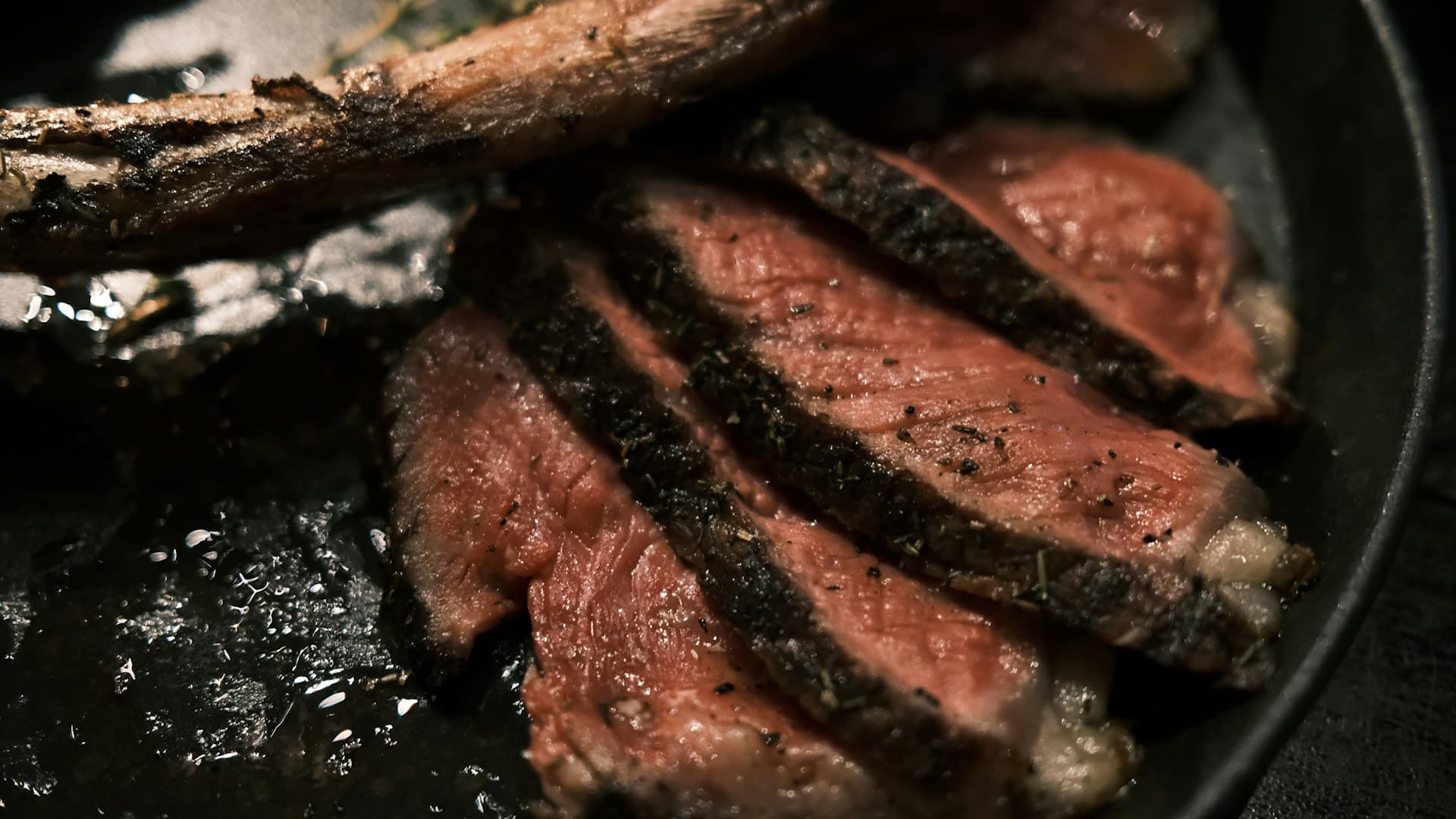
Target a Beef Baseline of 1.5 to 2 Pounds
Aim for 1.5 to 2 pounds of fatty meat per day as your foundational intake. This volume provides sufficient protein and fat for most adults to maintain muscle and energy without snacking.
For a standard male, this might look like two 16 oz ribeye steaks spaced throughout the day. Smaller individuals may find satiety at 1.25 pounds, while athletes often require more.
Supplement with Eggs and Dairy
Treat eggs and dairy as nutrient-dense sides rather than primary protein sources if you struggle with satiety. Eggs add essential nutrients but are less filling per calorie than steak.
Dairy can trigger overeating due to its high palatability and opiate-like casomorphins. A good ratio is adding 3–4 fried eggs alongside a steak, rather than eating eggs alone as a meal.
Limit Palatable Processed Meats
Use bacon, sausages, and cured meats strictly as flavor enhancers rather than main courses. Their high salt content and texture can override natural satiety signals, leading to overconsumption.
Limit yourself to 2–4 strips of bacon crumbled over a meal to add fat without spiking your sodium intake excessively. Prioritize fresh, unprocessed cuts for 90% of your intake.
Dose Organ Meats Sparingly
Consume organ meats like liver in small, medicinal doses rather than large portions. Because they are extremely high in Vitamin A and copper, large daily servings can lead to imbalances or toxicity symptoms.
A safe target is 2–4 oz of beef liver once or twice a week. Listen to your palate; if liver tastes repulsive, you likely do not need the nutrients it offers at that moment.
Scale Up Volume for Leaner Proteins
Increase your total food volume or add significant fat if your main meal consists of chicken, pork, or white fish. These meats are less calorically dense than beef, so you will physically need to eat more weight to feel satisfied.
For example, if you swap beef for chicken breast, you must add ~2 tablespoons of butter or tallow per serving to match the satiety profile. Understanding the weight of your food is only half the battle; the ratio of fat to protein is what dictates your energy levels.
Balancing Fat-to-Protein Ratios
A common mistake with carnivore diet portion sizes is eating too much lean muscle meat without enough fat. To maintain energy and avoid 'rabbit starvation,' you must prioritize fat alongside your protein.
Protein builds structure, but fat provides the fuel. Without adequate fat, you may feel tired and hungry despite a full stomach.
Calculate the 1:1 Gram Ratio
Strive for a 1:1 ratio of fat to protein by weight, which equates to roughly 70% of calories coming from fat. This ketogenic ratio is crucial for sustained energy and hormonal health in the absence of carbohydrates.
Example: If your meal contains 100g of protein, ensure you are also consuming ~100g of fat (either from the meat itself or added fat). This balance prevents the body from converting excess protein into glucose.
Verify Visual Fat Coverage
Inspect every bite of meat to ensuring visible white fat is attached. If a piece of meat looks entirely red or dry, it is likely too lean to keep you satisfied and should be supplemented.
Pro tip: Keep a container of tallow or butter on the table and add a "sidecar" of fat to every third bite if the steak is lean. Visual inspection is often more practical than tracking grams daily.
Prioritize Solid Fats Over Liquid
Consume fat in its solid state whenever possible to prevent digestive distress. Rendering all your fat (like drinking hot grease) can overwhelm the gallbladder and cause immediate diarrhea.
Example: Let your burger patties cool until the fat solidifies, or eat cold butter slices instead of pouring hot butter over your meal. Solid fat releases slower in the gut, providing sustained energy.
Utilize Pure Fat Supplements
Add pure fat sources if you cannot afford expensive fatty cuts like ribeye. Trimmings, suet, and butter are cost-effective ways to fix your macros without increasing your protein portion excessively.
Example: Ask your butcher for raw beef fat trimmings and lightly sear them to eat alongside lean roast beef. Now that you have the basics of meat and fat balance, you might wonder how to tweak these amounts for specific body goals.
Adjusting Intake for Specific Goals
Your portion sizes shouldn't remain static if your objectives change from weight loss to muscle gain. Small tweaks in volume and fat content can steer your body toward your desired outcome.
The beauty of this way of eating is that you don't need to overhaul the menu, just the proportions. Listening to your body remains paramount regardless of the goal.
Leverage Protein for Weight Loss
Lean slightly toward higher protein and moderate fat if your goal is aggressive fat loss, but never drop fat too low. You want the body to tap into its own stores, but you still need dietary fat for hormones.
A practical adjustment is choosing New York Strip (leaner) over Ribeye (fattier) for one meal a day, rather than cutting portion size. This creates a mild energy deficit without triggering starvation signals.
Surplus Calories for Muscle Gain
Push past the initial satiety signal by adding liquid fats or an extra meal to support hypertrophy. Since meat is so filling, it is difficult to eat a surplus without using calorie-dense additions.
Example: Add 1 cup of heavy cream (if tolerant) or 3 tablespoons of melted butter to your daily intake to easily add 300+ calories. This liquid energy bypasses the chewing satiety mechanism.
Establish a Maintenance Baseline
Find your 'steady state' consumption where weight stabilizes and energy remains constant. This baseline will fluctuate based on daily activity, so flexible portioning is key.
Example: You may naturally crave 2.5 lbs on workout days and only 1.5 lbs on rest days—honor both signals. Even with perfect planning, your appetite can behave strangely during the first month of adaptation.
What to Expect During the Transition Phase
When switching from a high-carb diet to a zero-carb lifestyle, your appetite signals may be chaotic for the first 30 days. It is crucial to distinguish adaptation symptoms from actual portion control issues.
Your body is essentially re-tooling its metabolic machinery. Patience is required as your enzymes and hormones adjust to the new fuel source.
Feed the "Bottomless Pit" Hunger
Eat as much as necessary during the first two weeks, even if it exceeds the standard 2-pound recommendation. Your body is repairing tissues and upregulating enzymes, creating a temporary spike in nutrient demand.
It is not uncommon to consume 3–4 lbs of meat per day during this healing phase before appetite naturally regulates down. Do not restrict calories during this critical window.
Navigate Meat Aversion
Combat nausea or food aversion by eating smaller portions more frequently or changing the temperature of the food. Aversion is often a sign that your bile production hasn't caught up to your fat intake.
Example: Switch to cold meats (like cold roast beef or prosciutto) which have less strong odors and are easier on a queasy stomach. Finally, let's troubleshoot some common signs that your portions might be off.
Signs You Are Undereating or Overeating
Because you aren't counting calories, you must rely on physical symptoms to judge your intake. Your energy levels and body temperature are often the best indicators of whether your portion sizes are correct.
The body communicates clearly when it is lacking fuel or burdened by excess. Learning to interpret these signs prevents long-term stalls.
Monitor for Cold and Lethargy (Undereating)
Watch for signs of metabolic downregulation, such as cold hands/feet, hair loss, or waking up alert at 3 AM. These symptoms suggest you are not eating enough total energy, specifically fat.
The solution is usually to add 2–3 tablespoons of butter or tallow to your daily intake immediately. Undereating is far more common than overeating for beginners.
Watch for Nausea and Urgency (Overeating)
Identify signs of fat intolerance or overconsumption, such as nausea 30 minutes after eating or urgent diarrhea. This typically means you consumed more rendered fat than your bile could emulsify.
Cut back on hot grease and prioritize protein for the next few meals until digestion settles. Small adjustments usually resolve these issues within 24 hours.
FAQ
How many ounces of meat should I eat on a carnivore diet?
Most people eat between 24 and 32 ounces (1.5 to 2 lbs) of meat daily. However, this is just a baseline; some days you may need 48 ounces, and others only 16.
It is best to start with 24 ounces divided into meals and add more until you are completely satisfied.
Can you eat too much protein on carnivore?
It is difficult to overeat protein from whole meat sources because of the strong satiety signals involved. "Protein poisoning" or rabbit starvation only occurs if you eat lean meat without enough fat.
As long as you include adequate fat (1:1 ratio by weight), high protein intake is generally well-tolerated and beneficial for muscle repair.
Should I weigh my food on a carnivore diet?
Weighing food is helpful for the first two weeks to train your eye, but it should not become a long-term crutch. The goal is to reconnect with internal hunger cues rather than external numbers.
Once you know what a 1 lb steak looks like, you can stop weighing and start eating intuitively.
Does the 2 lbs of meat include bone weight?
No, the recommendation of 1.5 to 2 lbs refers to the edible meat portion only. If you are buying bone-in cuts like T-bones or rib roasts, you need to account for the waste.
You typically need to buy about 25–30% more weight for bone-in cuts to hit your edible meat target.
Conclusion
Finding your ideal carnivore diet portion sizes is a process of unlearning restriction and embracing satiety. By starting with a baseline of 1.5 to 2 pounds of fatty meat and adjusting based on your energy and digestion, you will find your unique rhythm.
Trust your hunger signals, prioritize fat, and allow your body the time it needs to heal and regulate.
Get your personalized plan
Related Articles

Foods to Eat After Fasting: A Physician’s Guide to Safe Re-Feeding
Nutrition5 min read

Can I Drink Chicken Broth While Intermittent Fasting?
Nutrition5 min read

How to Curb Hunger When Fasting: Proven Strategies for Success
Nutrition5 min read

What to Eat Before Fasting: A Physician’s Guide to the Perfect Pre-Fast Meal
Nutrition5 min read
Does Fasting Boost Testosterone?
Nutrition5 min read

Can You Drink a Protein Shake While Fasting?
Nutrition5 min read
Comments
(0)Leave a comment
Your email will not be published. All fields are required.