What Is Walking Yoga? A Complete Guide for Beginners
By: Healthtime Editorial
Fact checked by: QA Team
Updated on: October 9, 2026
0
2722
8 min
In this article
- Understanding Walking Yoga: More Than Just a Stroll
- Physical and Mental Benefits of the Practice
- How to Practice Walking Yoga: A Step-by-Step Guide
- Common Techniques and Variations
- Safety Considerations and Best Practices
- FAQ

Walking yoga is a mindful exercise practice that synchronizes your breath with your stride while maintaining specific postural alignment. It transforms a standard daily walk into a conscious movement discipline that regulates the nervous system.
This guide covers the mechanics of the practice, its physiological benefits, and a step-by-step routine for beginners. I will also explore how to adapt the technique for different fitness levels and environments.
Understanding Walking Yoga: More Than Just a Stroll
This practice elevates a standard daily walk by integrating the intentional focus, posture, and breath control found in studio yoga. It transforms automatic movement into a conscious exercise that benefits both the cardiovascular system and the nervous system.
Defining the practice: Breath meets cadence
The core mechanism of walking yoga is the precise synchronization of breath with footsteps, often following a specific ratio. For instance, you might inhale for four steps and exhale for four steps, creating a rhythmic loop.
This differs significantly from 'zoning out' or listening to a podcast during a walk. The practitioner remains acutely aware of body alignment, essentially holding Tadasana (Mountain Pose) in motion.
I find that this method keeps the mind anchored in the present moment. It is accessible to almost anyone who can walk, requiring no mats or studio fees.
Key differences: Walking Yoga vs. Mindful Walking
Many people confuse these terms, but they have distinct physiological goals. The table below clarifies how walking yoga incorporates specific breathwork and asanas that set it apart.
| Activity Type | Primary Focus | Physiological Goal |
|---|---|---|
Regular Walking | Transportation or basic fitness | Getting from A to B |
Mindful Walking | Sensory awareness | Mental grounding |
Walking Yoga | Breath retention & mudras | Vagus nerve stimulation |
The roots: From Kinhin to modern adaptation
The practice has deep historical roots, referencing 'Kinhin,' the Zen tradition of walking meditation used between long periods of sitting. Kundalini yoga also utilizes 'Breathwalk' techniques to combine mantra with movement.
The modern 2025 iteration has evolved into a functional fitness trend. It blends these ancient roots with contemporary biomechanics to address sedentary lifestyle issues.
Once we understand the mechanics, it is important to look at why this specific combination of movement and breath is so effective for health.
Physical and Mental Benefits of the Practice
Combining low-impact aerobic activity with meditative focus creates a physiological synergy that often amplifies the benefits of doing either in isolation. I often recommend this approach for individuals looking to improve metabolic health without the stress of high-impact interval training.
Low-impact cardiovascular efficiency
Adding rhythmic breathing to walking can increase oxygenation and lung capacity without spiking the heart rate to anaerobic levels. This keeps the body in Zone 2, which is optimal for fat oxidation and mitochondrial health.

This efficiency is beneficial for long-term heart health. It allows you to build endurance without the joint strain associated with running or HIIT classes.
Cortisol regulation and stress management
Walking yoga triggers a 'nervous system reset' effect that is distinct from regular exercise. The rhythmic nature of the movement activates the parasympathetic nervous system, also known as the 'rest and digest' state.
Research indicates that this intentional breathing helps lower cortisol levels more effectively than a rushed or distracted walk. It turns a physical activity into a stress-reduction tool.
Enhanced proprioception and balance
Walking with 'yogic awareness' significantly improves physical stability. You must pay close attention to foot placement, ensuring a deliberate heel-to-toe connection with every stride.
This focus on core engagement and weight distribution enhances overall balance. It is critical for fall prevention, especially in aging populations who wish to maintain independence.
Accessibility for limited mobility
This practice does not require getting up and down from the floor, which eliminates a major barrier for many. It is ideal for those with wrist issues, knee pain, or difficulty with traditional mat yoga.
If balance is a primary concern, I suggest using walking poles for added stability. This modification allows you to participate fully while maintaining safety.
With the benefits clear, let’s break down exactly how to structure a session, from the first breath to the final step.
How to Practice Walking Yoga: A Step-by-Step Guide
You do not need a studio membership or specialized equipment to begin; the outdoors becomes your practice space. Following a structured sequence ensures you maintain the 'yoga' element rather than drifting back into a standard walk.
Step 1: Set your intention and alignment
Start by standing still in Mountain Pose (Tadasana) before taking a single step. Ensure your feet are hip-width apart and your spine is lengthened.
Roll your shoulders back and establish a clear mental intention for the practice. This could be a single word like 'calm' or 'strength' to anchor your mind.
Step 2: Establish a rhythmic breath ratio
Find a stable breath pattern before you begin moving. A simple ratio, such as a 4-count inhale and a 4-count exhale, works well for beginners.
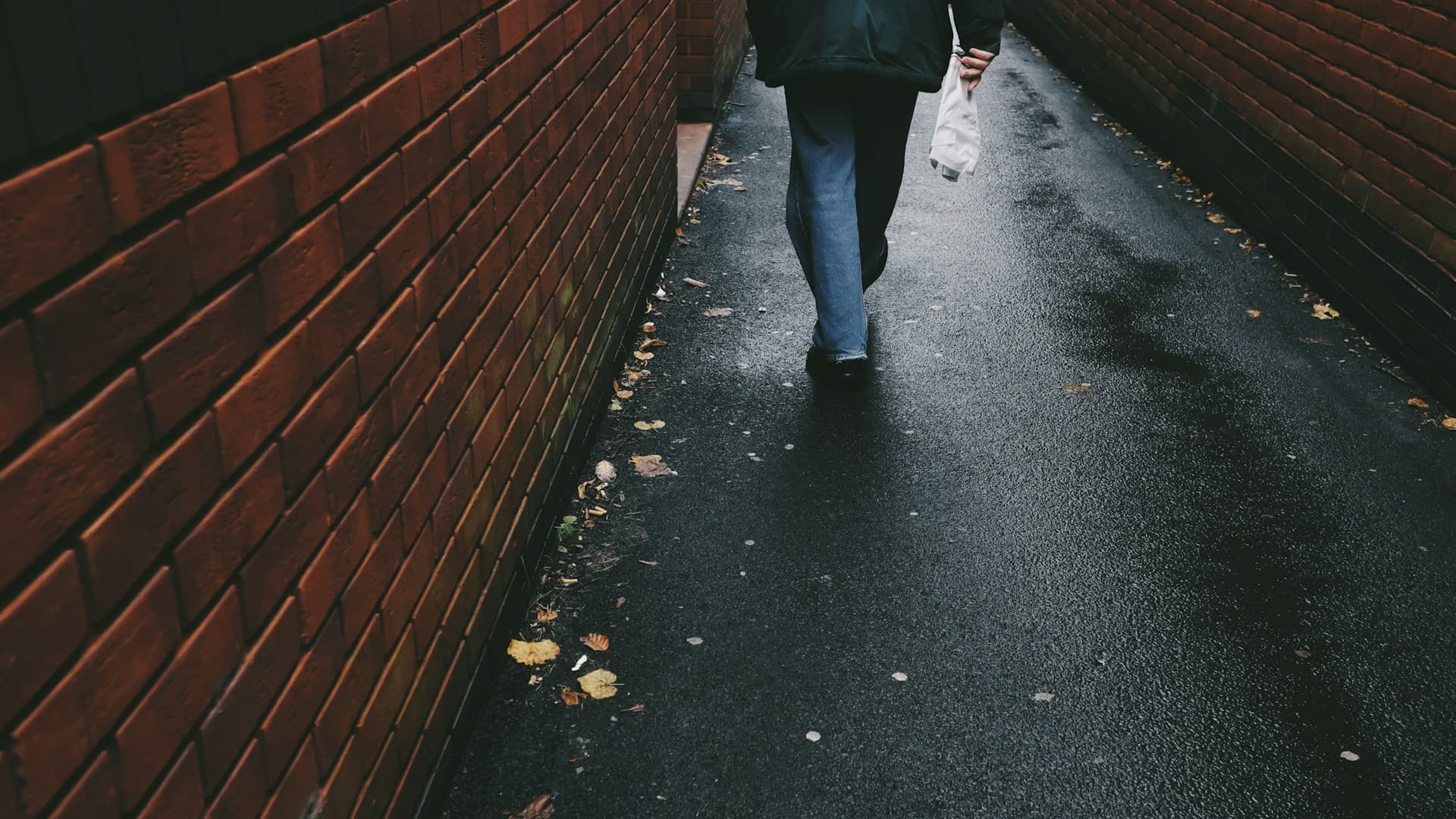
You can also try a 4:6 ratio to emphasize relaxation and exhalation. Always breathe exclusively through the nose to filter the air and regulate its temperature.
Step 3: Synchronize steps with breath
Lock your walking cadence to your established breath count. For example, take exactly four steps during the inhale and four steps during the exhale.
Adjust the speed of your walking to match your breath, not the other way around. If you run out of breath, slow your pace down immediately.
Step 4: Integrate upper body movements
Add simple arm movements to the walk once your rhythm is steady. You might synchronize arm raises with inhalations, mimicking a moving Sun Salutation.
Some practitioners use hand mudras, or seals, to maintain focus during the walk. This integration increases circulation to the upper body and engages the mind.
Step 5: The 'Pause and Pose' method
Stop every 5–10 minutes to perform a standing pose. Accessible poses like Tree Pose work well, using a tree or bench for support if needed.
A standing forward fold is another excellent option during these pauses. It helps release hamstring tension accumulated during the walk.
Step 6: Closing with a grounding cool-down
Do not just stop abruptly when you are finished. Slow your pace gradually and return to normal, non-counted breathing.
Stand in stillness for at least one minute to absorb the effects of the practice. This final pause is essential for nervous system integration.
Once you have mastered the basic flow, you can explore specific variations tailored to different energy levels and goals.
Common Techniques and Variations
Walking yoga is highly adaptable, allowing you to shift between meditative calm and active strength building depending on your needs. These variations range from traditional lineage-based methods to modern fitness adaptations.
The 'Breathwalk' technique
This specific method is rooted in Kundalini yoga and is excellent for boosting energy. It often uses segmented breathing, such as four short sniffs in and four short sniffs out.
Practitioners combine this breath with finger taps, or mudras, on each step. I find this technique particularly effective for clearing mental fog.
Active flow: Lunges and Warriors
For a more physical version, incorporate deep lunges into your stride. You can also transition into Warrior I poses, holding the posture for a breath cycle before moving forward.
This variation significantly increases the muscular demand on the legs and glutes. It turns the walk into a moderate strength workout while maintaining mindfulness.
The sensory walk
This variation focuses entirely on sensory input rather than strict breath counting. You direct your attention outward to sight, sound, and touch.
This is often used for grounding during high-anxiety moments. It is also safer when navigating uneven terrain where counting might be distracting.
While the practice is gentle, safety and preparation are still key to preventing injury and ensuring a sustainable routine.
Safety Considerations and Best Practices
Even low-impact activities require attention to biomechanics and environment to prevent strain. Treating your walk with the same respect you would a gym session helps avoid common overuse injuries.
Selecting the right terrain and footwear
Beginners should choose flat, stable surfaces to avoid ankle rolls while focusing on breath. A park path or paved track is ideal for learning the rhythm.
Supportive footwear that allows for natural toe spread is crucial. Rigid hiking boots often restrict foot movement, which can hinder the 'roll-through' motion of the stride.
Posture checks: The 'Text Neck' trap
Avoid looking down at your feet or a phone while practicing. Dropping the head constricts the airway and ruins the pranayama aspect of the practice.
Maintain a gaze focused on the horizon, known as your drishti. This helps keep the cervical spine aligned and the chest open.
Listening to your body
It is vital to distinguish between the discomfort of effort and the pain of injury. If you experience sharp pain in the knees or hips, stop immediately.
Dizziness during breath retention is also a sign to pause and return to normal breathing. Consult a professional if these symptoms persist.
To help you get started, here are answers to some frequently asked questions about the practice.
FAQ
Can walking yoga be done on a treadmill?
Yes, a treadmill provides a consistent surface that can make it easier to learn the breath-step rhythm. However, practicing outdoors offers additional mental health benefits through exposure to nature.
How long should a walking yoga session last?
I suggest starting with 15 to 20 minutes to prevent mental fatigue. As your concentration improves, you can extend the session to 45 minutes or longer.
Do I need to wear yoga clothes for this?
You do not need specific yoga attire, but comfortable clothing that allows for a full range of motion is best. Dress in layers if you are practicing outdoors to manage body temperature changes.
Is walking yoga suitable for seniors?
Absolutely, it is an excellent option for seniors due to its low impact and focus on balance. Using walking poles can provide extra stability and confidence.
Related Articles
7 Training Myths You Should Know to Stop Wasting Effort and Build Real Strength
Fitness5 min read
Which Exercise Burns the Most Calories: Time-Efficient Routines
Fitness5 min read
.jpg&w=3840&q=75)
Nordletics App Review: What's Inside, What It Costs, and How To Manage It
Fitness5 min read
6 Reasons to Walk Everyday: How This Habit Boosts Mood, Heart Health, and Longevity in 2026
Fitness5 min read
Walking Yoga App Review: My Results After 30 Days of 15-Minute Sessions for Weight Loss and Calm
Fitness5 min read
Nord Yoga App Review: How 5 Minutes Daily Lifted My Jawline in 4 Weeks
Fitness5 min read
Comments
(0)Leave a comment
Your email will not be published. All fields are required.