Face Yoga Exercises: A Daily Routine for Lifting and Toning
By: Healthtime Editorial
Fact checked by: QA Team
Updated on: October 9, 2026
0
321
8 min
In this article
- Face yoga vs. facial tools: Key differences at a glance
- Preparation: Setting the stage for safe practice
- 5 Essential face yoga exercises for a full-lift effect
- Targeted moves for specific concerns
- Creating a sustainable practice schedule
- Safety and mistakes to avoid
- FAQ
- Conclusion
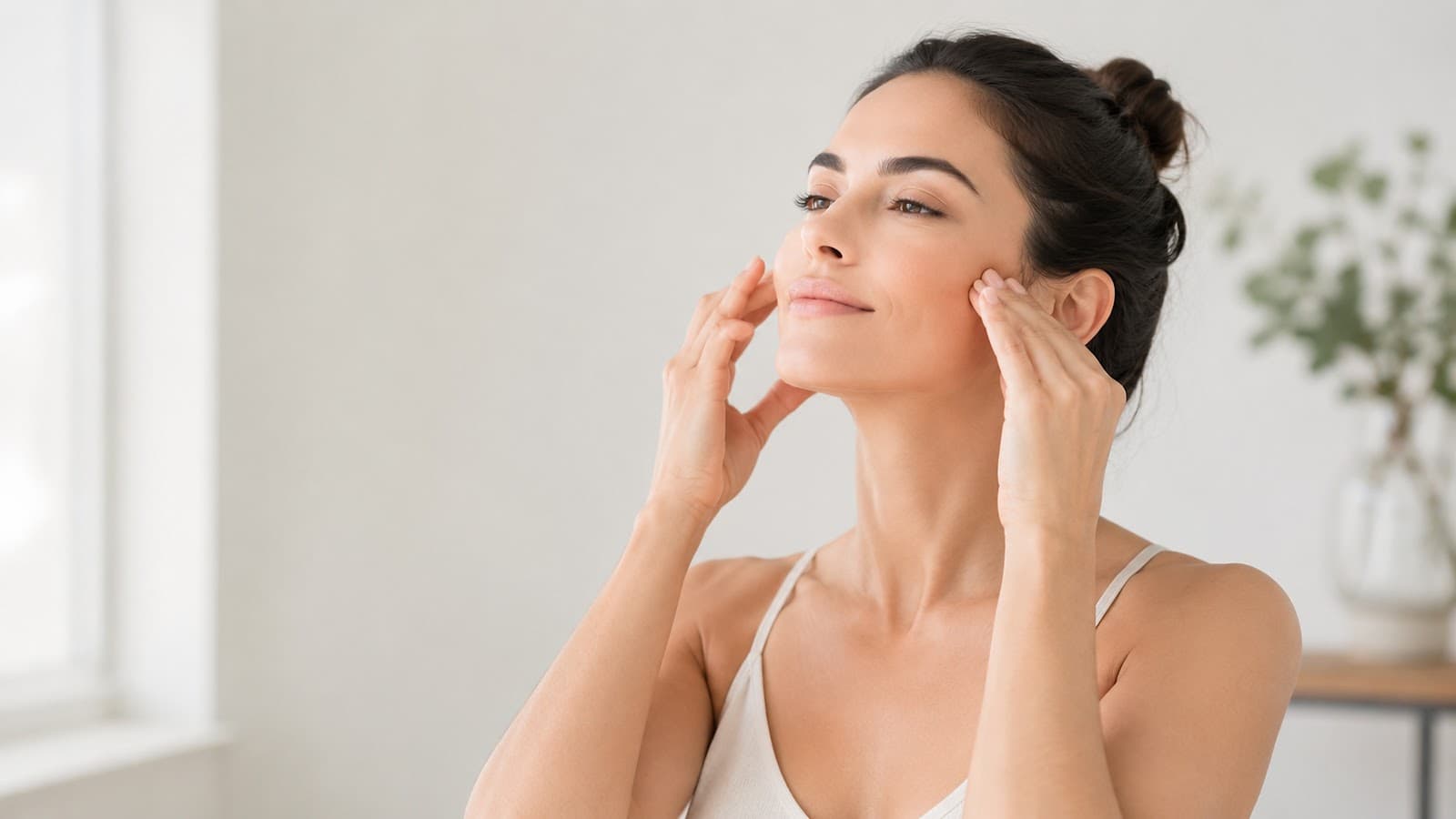
Sagging skin and facial tension can make you look tired, even when you feel great.
While many rely on products and treatments, they often overlook the muscles beneath the surface.
Incorporating a simple daily face yoga routine can naturally lift, tone, and relax these muscles, giving your face a firmer, more refreshed appearance.
Face yoga vs. facial tools: Key differences at a glance
While both manual exercises and beauty tools aim to improve skin appearance, they work through different physiological mechanisms. Understanding these distinctions helps you decide which method—or combination—best suits your goals.
Comparison of natural lifting methods
The following comparison highlights how face yoga focuses on active muscle engagement compared to the passive nature of tools.
| Method | Mechanism | Time Commitment | Primary Benefit | Cost |
|---|---|---|---|---|
Face Yoga | Muscle building | Daily active effort | Structural lift | Free |
Gua Sha | Lymphatic drainage | Variable | Depuffing | Tool cost |
Microcurrent | ATP stimulation | Daily/Weekly | Tone/Lift | High cost |
Face yoga focuses on hypertrophy, or the strengthening of the facial mimetic muscles. Tools like jade rollers typically address fluid dynamics or surface circulation rather than deep structural tone.
Why muscle engagement matters
Facial anatomy is unique because many facial muscles attach directly to the skin, unlike body muscles that attach bone-to-bone. When you strengthen these underlying muscles, they increase in volume and tone, theoretically providing a 'lift' to the attached skin.
This action can smooth out sagging areas by filling out the volume from beneath. Passive treatments treat the skin surface but do not address the muscle atrophy that occurs with age.
Research indicates that regular resistance training for the face can rejuvenate facial appearance. Before engaging these muscles, it is critical to prepare the skin to prevent accidental damage.
Preparation: Setting the stage for safe practice
To avoid creating new wrinkles or irritating your skin, proper preparation is non-negotiable. I always emphasize that the condition of your skin surface is just as important as the movement of the muscles underneath.
Cleanse and lubricate
Start with a thoroughly clean face and hands to prevent bacterial transfer, especially since you will be touching your face extensively. Applying a facial oil, serum, or rich moisturizer is essential to create 'slip' on the skin.
If the skin drags or pulls during massage-style moves, you risk damaging delicate elastin fibers. I often reapply product halfway through a session if it absorbs too quickly.
Posture and relaxation
Overall body posture plays a surprising role in the effectiveness of facial exercises. Sit upright with your shoulders relaxed and down, actively pulling them away from your ears.
Tension in the neck or shoulders can inhibit circulation to the face and lead to compensatory straining. I suggest taking three deep, diaphragmatic breaths to reset the nervous system before beginning the routine.
Once you are prepped and aligned, you can begin the core exercises designed to target the major muscle groups.
5 Essential face yoga exercises for a full-lift effect
This core sequence targets the largest muscle groups to provide a holistic lifting effect. Perform these movements slowly, focusing on isolation rather than intensity.
The Forehead Smoother
This exercise targets the Frontalis muscle to reduce horizontal lines. By using your hands as a stabilizer, you ensure the muscle works without folding the skin.
1. Place hands — Position fingers spread inwards across the forehead.
2. Apply pressure — Hold the skin firmly in place to prevent wrinkling.
3. Lift brows — Attempt to raise your eyebrows against the resistance of your hands.
Hold this contraction for 5–10 seconds and repeat three times. This strengthens the forehead without creating horizontal wrinkles because the hands act as a splint.
The Upper Eyelid Lifter
The Orbicularis Oculi is the ring muscle around the eye, and toning it can help with drooping eyelids. This move requires precision to isolate the lower lid movement.
1. Position fingers — Place middle fingers at inner corners and index fingers at outer corners of eyebrows.
2. Look up — Direct your gaze to the ceiling without moving your head.
3. Squint upwards — Use the lower eyelids to squint up, feeling a pulse in the outer eye.
This helps counteract puffiness by toning the eye area safely. Many people feel a distinct shake or flutter in the muscle, which indicates proper engagement.
The Cheek Sculptor
Targeting the Zygomaticus muscles helps lift the mid-face and reduce the appearance of nasolabial folds. This exercise mimics a smile but uses resistance and form to maximize lift.
1. Form an 'O' — Open your mouth and hide your teeth with your lips.
2. Smile wide — Keep teeth hidden while smiling broadly to lift cheek muscles.
3. Check engagement — Place index fingers lightly on top of cheeks to feel the contraction.
You should feel the muscles lifting vertically towards your eyes. This movement aids in restoring volume to the cheek area naturally.
The Jawline Definer
This move focuses on the Masseter and submental area to define the jaw profile. It is particularly effective for reducing the appearance of jowls.
1. Tilt head — Gently look up at the ceiling, keeping the neck long.
2. Push jaw — Extend your lower jaw forward comfortably.
3. Wrap lip — Curl your lower lip over your upper lip and hold.
You will feel a strong stretch along the jawline and under the chin. Be careful not to crunch the back of your neck during the tilt.
The Neck Tightener
The Platysma muscle runs down the front of the neck, and toning it can reduce banding. This exercise helps tighten the neck area and release accumulated tension.
1. Anchor skin — Place fingertips at the collarbone and stroke skin downward.
2. Tilt back — Look up while keeping the chest open.
3. Frown corners — Pull the corners of your mouth down to activate neck muscles.
This action releases tension in the platysma bands. Beyond this foundational routine, you may want to add specific movements for targeted concerns.
Targeted moves for specific concerns
We all have unique areas where we hold tension or notice aging first. These isolated exercises can be added to your routine to address specific trouble spots.
Smoothing the '11' lines (Glabella)
The procerus and corrugator muscles between the eyebrows are responsible for the '11' lines. This resistance technique teaches these muscles to relax.
1. Place finger — Press an index finger firmly between the brows.
2. Attempt frown — Try to frown against the finger's resistance.
3. Release — Stop the frown and feel the muscle relax.
This strengthens the muscle without deepening the furrow. Chronic frowning is often a habit we can unlearn through this awareness.
Reducing double chin appearance
The submental area often loses tone due to posture and age. The 'tongue press' targets the deep suprahyoid muscles effectively.
Press the tip of your tongue firmly against the roof of your mouth behind your teeth. Then, slide the tongue flat against the roof while keeping the jaw closed.
This engages the deep muscles under the chin that are often neglected. Regular practice helps to firm the area immediately under the jaw.
Softening smile lines (Nasolabial folds)
The lines running from the nose to the mouth can deepen with tension. The 'Big O' smooth technique helps relax this area.
Make a long, narrow 'O' with your mouth to stretch the skin between the nose and lip. Use your tongue to massage the inside of the cheek along the laugh line area.
This internal massage helps relax the tension that deepens these folds. It also encourages circulation to the area, plumping the skin temporarily.
Lifting drooping mouth corners
The Depressor Anguli Oris muscle can pull the expression downwards over time. Resistance training here helps restore a neutral or lifted resting expression.
Smile slightly to lift the corners of your mouth. Use your index fingers to firmly press the corners upwards against the resistance of the muscle trying to frown slightly.
Hold this for 10 seconds to build strength in the elevators of the mouth. Consistency is the primary driver of results, so establishing a manageable schedule is key.
Creating a sustainable practice schedule
Like any gym workout, sporadic sessions will not yield significant structural changes. I recommend integrating these exercises into your existing self-care rituals to ensure adherence.
Recommended frequency and duration
Start with a realistic timeline of 10–15 minutes a day, 5–6 days a week. Muscles in the face are smaller than body muscles and can fatigue quickly, but they also recover fast.
Over-training can lead to fatigue or spasms, so listen to your body. A short daily practice is far superior to a long session once a week.
Morning vs. evening practice
Morning practice is excellent for waking up the face and reducing sleep puffiness. It boosts circulation, giving you a 'glow' for the day ahead.
Evening practice can be helpful for releasing tension accumulated during the day, such as jaw clenching. It acts as a relaxation technique before sleep, so choose the time that allows you the most focus.
With a consistent routine in place, it is important to manage your expectations regarding the timeline of results.
Safety and mistakes to avoid
While face yoga is generally safe, incorrect technique can be counterproductive. Being mindful of these common pitfalls will ensure you are toning, not damaging, your skin.
Creating dynamic wrinkles
Dynamic wrinkles are lines formed by repetitive motion, which we want to avoid. Watch yourself in a mirror to ensure you aren't scrunching your forehead while working your eyes.
The goal is to isolate the target muscle while keeping the rest of the face smooth and relaxed. If you see lines forming, use your hands to smooth the skin during the movement.
Contraindications and caution areas
Modify or avoid practice if you have specific medical concerns. Consult a professional if you have a history of TMJ disorders or recent facial surgery.
Exercises might migrate injectables like Botox or fillers, so wait until they have settled or consult your provider. If you experience clicking in the jaw or sharp pain, stop immediately and seek care.
Understanding these safety parameters leads us to some common questions beginners often ask.
FAQ
Do face yoga exercises actually work?
Yes, studies suggest that regular facial exercises can strengthen muscles and improve fullness. A 2018 study found that women who performed daily exercises for 20 weeks appeared younger.
Can face yoga cause wrinkles?
If performed incorrectly with excessive scrunching, it is possible to deepen lines. Using a mirror and proper hand placement to stabilize the skin minimizes this risk.
How long does it take to see results from face yoga?
Some people notice a glow immediately due to increased circulation. Structural changes typically require consistent practice for at least 6 to 10 weeks.
Is it safe to do face yoga with Botox or fillers?
It is generally advised to wait at least two weeks after injections before starting exercises. Moving the muscles too soon can potentially displace the product or shorten its effect.
Conclusion
Incorporating face yoga exercises into your daily routine is a proactive way to support your facial structure. By consistently strengthening these muscles, you can achieve a more lifted and toned appearance over time.
Remember that patience and proper form are your best tools for success. Start with the essential moves today to begin your journey toward natural facial rejuvenation.
Related Articles
7 Training Myths You Should Know to Stop Wasting Effort and Build Real Strength
Fitness5 min read

Which Exercise Burns the Most Calories: Time-Efficient Routines
Fitness5 min read
.jpg&w=3840&q=75)
Nordletics App Review: What's Inside, What It Costs, and How To Manage It
Fitness5 min read

6 Reasons to Walk Everyday: How This Habit Boosts Mood, Heart Health, and Longevity in 2026
Fitness5 min read

Walking Yoga App Review: My Results After 30 Days of 15-Minute Sessions for Weight Loss and Calm
Fitness5 min read
Nord Yoga App Review: How 5 Minutes Daily Lifted My Jawline in 4 Weeks
Fitness5 min read
Comments
(0)Leave a comment
Your email will not be published. All fields are required.