Protein and GLP-1 Medications: Protecting Muscle During Weight Loss on Ozempic and Mounjaro
By: Healthtime Editorial
Fact checked by: QA Team
Updated on: September 17, 2026
0
401
5 min
In this article
- Why GLP-1 Medications Can Lead to Muscle Loss
- How Much Protein Do GLP-1 Users Actually Need?
- Best Protein Sources for GLP-1 Users.
- Spreading Protein Across the Day
- The Role of Resistance Exercise
- Tracking Protein to Know You Are Actually Hitting Targets
- The Bottom Line
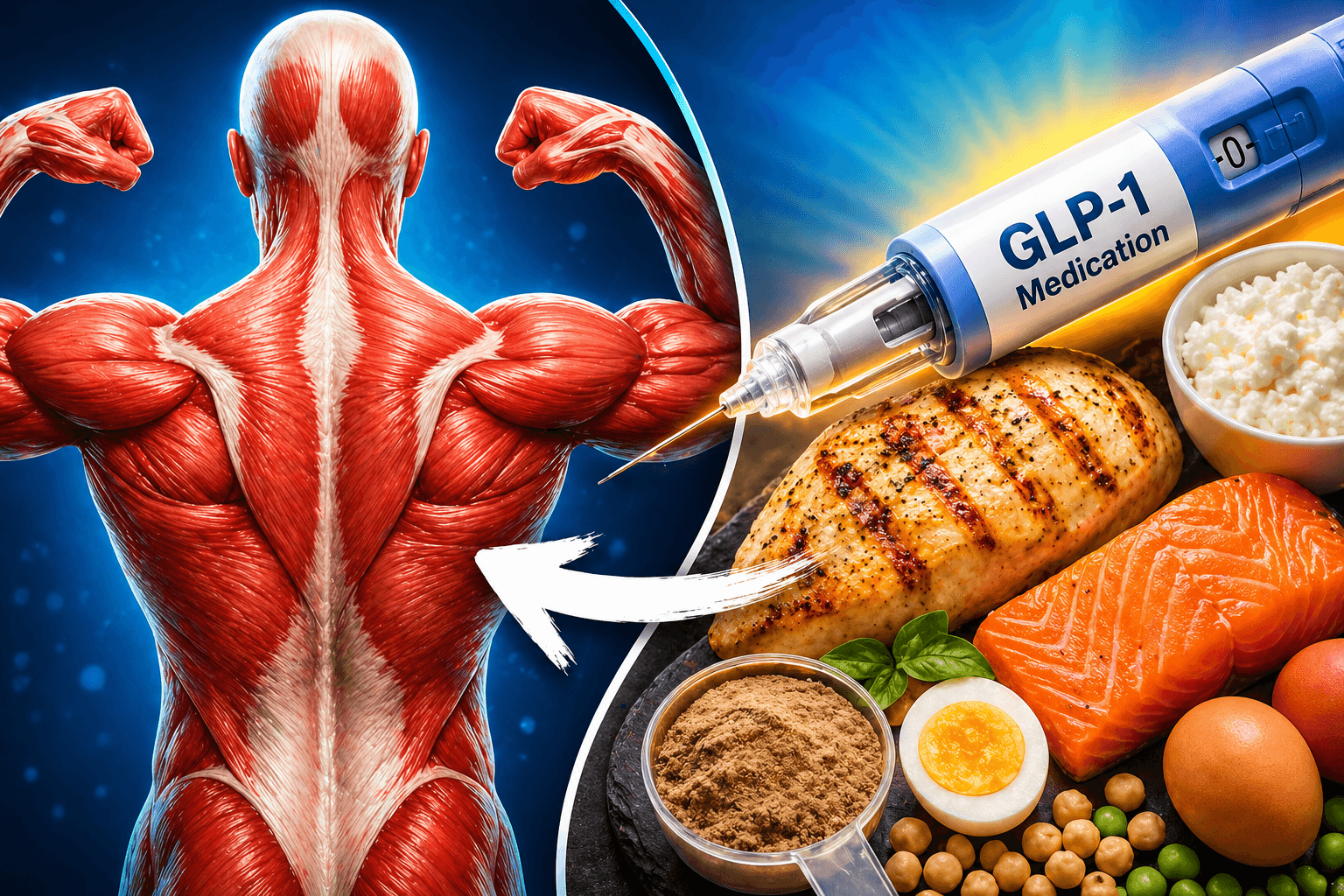
GLP-1 medications deliver impressive weight loss results. Clinical trials of semaglutide and tirzepatide consistently show patients losing between 13% and 22% of their body weight over 68 to 72 weeks. But here's what most people don't realize: weight is not just fat–and that distinction matters enormously for long-term health.
Think of the GLP Diet as the nutritional complement to your medication–the structure that makes your results stick.
Why GLP-1 Medications Can Lead to Muscle Loss
GLP-1 receptor agonists reduce appetite dramatically. Patients often eat 30% to 50% fewer calories than before treatment, sometimes without even noticing the reduction.
The medication does not distinguish between fat and muscle when creating a caloric deficit–the body draws on both energy stores when calories are insufficient.
This is exactly the gap GLP Diet app was built to close: giving GLP-1 users a structured, protein-forward eating and exercise framework so that the weight coming off is fat, not muscle.
How Much Protein Do GLP-1 Users Actually Need?
Current evidence-based guidelines for adults undergoing medically supervised weight loss recommend a minimum of 1.2 grams of protein per kilogram of body weight per day, with many obesity medicine specialists suggesting targets of 1.5 to 2.0 grams per kilogram for patients on GLP-1 medications specifically.
For a 75-kilogram adult, that means 90 to 150 grams of protein daily–a target that requires intentional planning, especially with a significantly reduced appetite.
GLP Diet's meal plans are built around exactly these targets, removing the guesswork of hitting adequate protein on days when eating feels like a chore.
Best Protein Sources for GLP-1 Users.
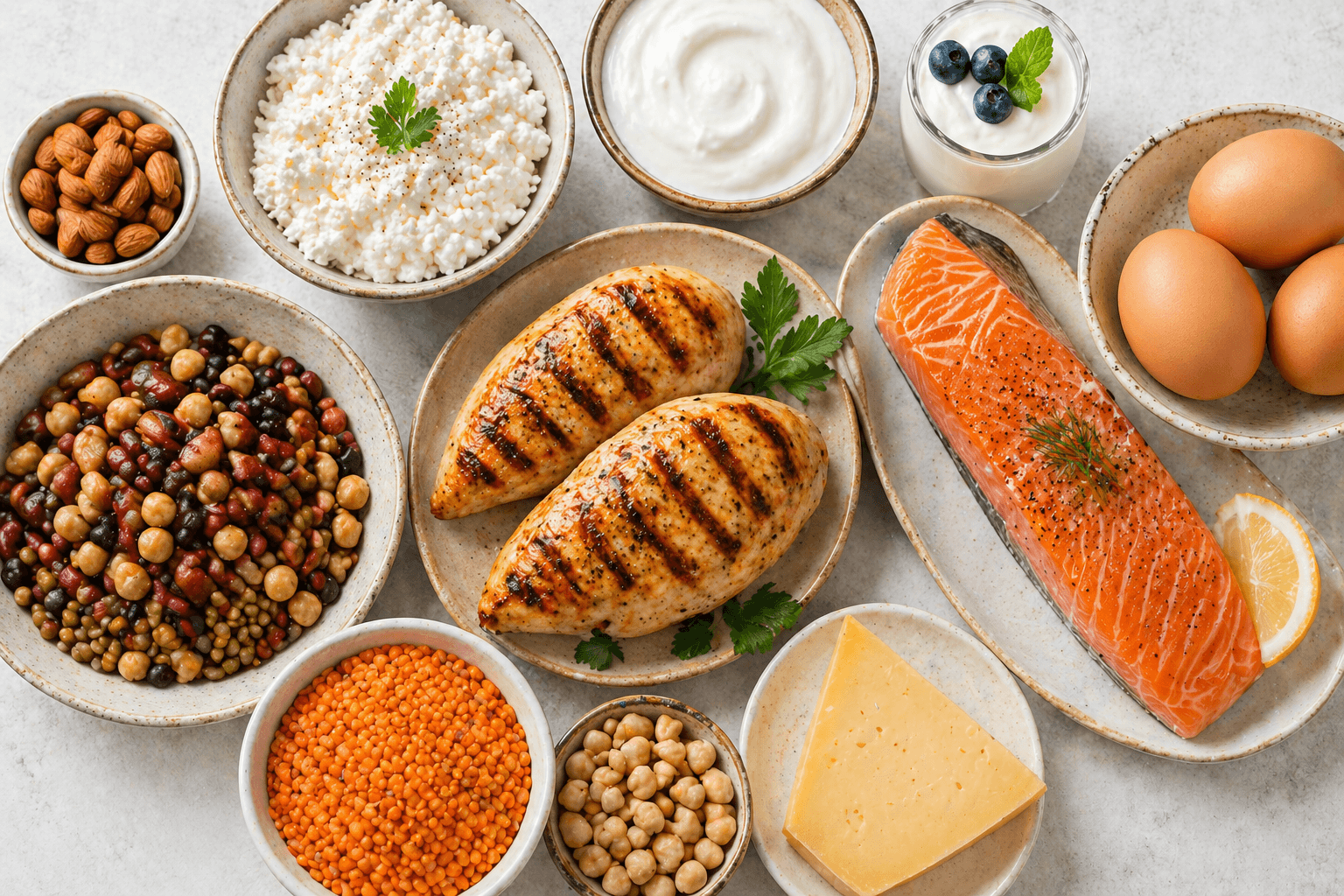
The most practical protein sources for GLP-1 users deliver high protein content in small volumes, are easy to prepare, and are gentle on a digestive system already slowed by medication.
These include eggs, Greek yogurt, cottage cheese, canned tuna or salmon, skinless poultry, whey or casein protein powder, and plant-based options like edamame and lentils.
GLP Diet's recipe library is specifically curated around these foods–meals designed to be small in volume, high in protein, and easy on a GLP-1-slowed stomach.
Spreading Protein Across the Day
Research on muscle protein synthesis consistently shows that spreading protein intake across multiple meals is more effective for muscle preservation than concentrating it in one or two sittings.
Each meal ideally contains at least 25 to 30 grams of protein to trigger an optimal anabolic response.
GLP Diet app structures daily meal plans around this principle–every eating occasion in the app includes a meaningful protein anchor, so users aren't accidentally front- or back-loading their protein without realizing it.
The Role of Resistance Exercise
Protein intake alone cannot fully prevent muscle loss during significant caloric restriction.
Resistance training–exercises that challenge muscles against load, including bodyweight movements, resistance bands, or weights–signals the body to preserve and rebuild muscle tissue.
Even two to three sessions per week meaningfully reduces muscle loss during a caloric deficit.
The GLP Diet app integrates exercise guidance directly alongside nutrition, with workout plans calibrated to GLP-1 users' energy levels and physical capacity–because the app understands that someone on Ozempic or Mounjaro may be eating less and feeling differently than a typical dieter.
Tracking Protein to Know You Are Actually Hitting Targets
Most people significantly underestimate their protein intake when eating by intuition alone. On GLP-1 medications, where overall food volume is reduced and appetite cues are unreliable, this gap can be particularly dangerous for muscle preservation.
The GLP Diet app functions as the tracking and accountability layer that medication alone simply cannot provide–showing users in real time whether their day's eating is actually meeting their protein targets, and suggesting adjustments when it isn't.
In many ways, the GLP Diet app does for nutrition what Ozempic does for appetite: it removes the guesswork and replaces it with a clear, structured system.
The Bottom Line
GLP-1 medications are powerful tools for weight loss. Protecting the quality of that weight loss–ensuring it comes primarily from fat rather than muscle–requires deliberate attention to protein intake and regular resistance exercise.
GLP Diet was designed specifically for this gap: a structured, science-backed companion for GLP-1 users that combines protein-optimized meal plans with exercise guidance tailored to life on the medication.
Patients who combine GLP-1 treatment with the right nutritional structure consistently report better energy, strength, and physical function–and a significantly stronger foundation for maintaining results long-term.
Related Articles
Flame Diet App Review: What You Get, What It Costs, and How To Cancel
Nutrition5 min read

Senior Diet App Review: What's Included, What It Costs, and How To Cancel
Nutrition5 min read
K-Diet App Review: What's Inside, What It Costs, and How To Manage It
Nutrition5 min read

Is It Keto: Your Guide to Checking Foods Fast and Entering Ketosis in 3-4 Days
Nutrition5 min read
.jpg&w=3840&q=75)
What Is the Healthiest Diet for Healthy Aging in 2026: A Practical Guide
Nutrition5 min read

What to Eat on Mediterranean Diet in 2026: Practical Guide for Sustainable Energy
Nutrition5 min read
Comments
(0)Leave a comment
Your email will not be published. All fields are required.