Take this FREE quiz to get your personalized blood sugar-stabilizing plan
START NOW
An Endocrinologist Reveals: Blood Sugar and Cortisol Are the Real Reason You Can’t Lose Weight After Menopause
- Why Blood Sugar Gets Worse After Menopause
- Why Most Diets Don’t Work After 40
- 5 Common Mistakes That Disrupt Blood Sugar (and Keep You Overweight)
- 1. Skipping Breakfast
- 2. “Healthy” Snack Bars and Smoothies
- 3. Over-snacking
- 4. Late-Night Eating
- 5. Following Generic Diet Plans
- What I Started Doing Differently With My Patients
- Why I Decided to Recommend a Full Plan (Not Just Rules)
- The Plan That Made It Simple (and Personal)

If you’re a woman in menopause or perimenopause, you’re probably familiar with this:
At first, the small things start adding up: tighter clothes, bloating that doesn't go away, and cravings that hit harder than they used to.
Then the weight creeps up, even though you're eating less. The energy crashes come earlier. The belly fat feels like it's here to stay.
Of course, you’re looking for a way out of this, like many women do. You're doing everything right… yet, nothing changes.
As an endocrinologist, I’ve seen this happen to woman after woman once they hit their mid-40s and beyond.
It’s not just age. It’s not just your menopause hormones "changing."
But in reality, it’s a hidden chain reaction between blood sugar, insulin resistance, and cortisol.
Because once insulin resistance starts to take hold (something most women aren’t even warned about), the weight gain becomes inevitable.1
And if no one has told you this yet, let me: blood sugar control is the most overlooked factor in menopausal weight gain.2
And it’s the first one I address with every patient who walks into my office.
Why Blood Sugar Gets Worse After Menopause
Here’s what most doctors don’t care to explain:
When estrogen declines during perimenopause and menopause, cortisol (stress hormone) levels rise, blood sugar increases, and your body becomes less sensitive to insulin – the hormone that regulates your blood sugar.3
That means:
❌ Your blood sugar spikes higher throughout the day, especially after meals
❌ Over time, your cells stop responding, and insulin stays high
❌ Your body starts storing more fat, especially around your belly
❌ You’re suddenly extremely tired in the afternoons
❌ Cravings hit harder and become almost impossible to resist
Add rising cortisol (your stress hormone) to the mix, and your body enters a loop that keeps you in a fat storage mode, especially around the waist.4
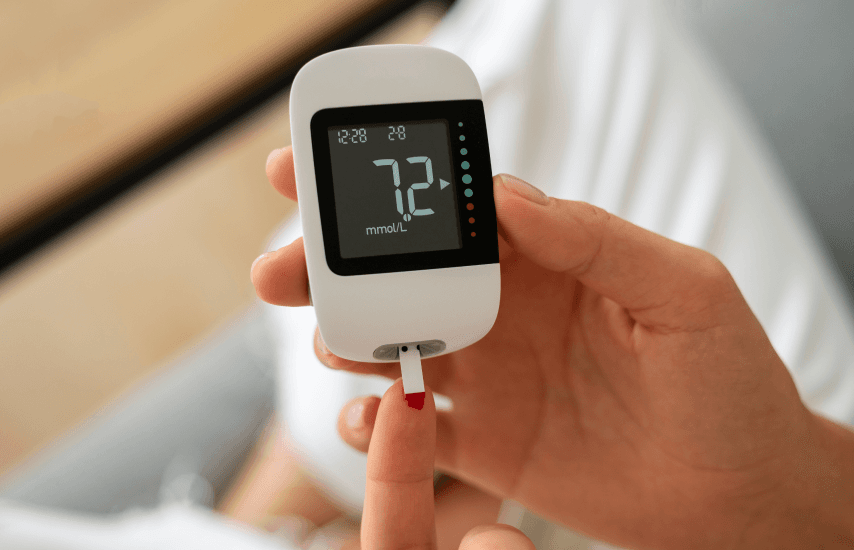
This isn’t just about how you look.
Chronically high blood sugar increases the risk of heart disease, dementia, type 2 diabetes, and accelerates biological aging.5
And how do most women respond to that? Of course, they look into the multi-million dollar industry of dieting.
Let me tell you exactly why that could be a waste of time…
Why Most Diets Don’t Work After 40
When women notice their weight climbing after 40, the instinct is to fix it as soon as possible.
Eat less… Cut out carbs…
Or sign up for another 6-week challenge.
But here’s what no one tells you:
If your metabolism has already slowed due to hormonal shifts, and your blood sugar is unstable, restrictive dieting can make things worse.
Because your body doesn’t just forget, it remembers every calorie you took away. Every time it had to function on too little fuel.
And the moment you try to eat normally again, it clings to calories like it’s in survival mode.
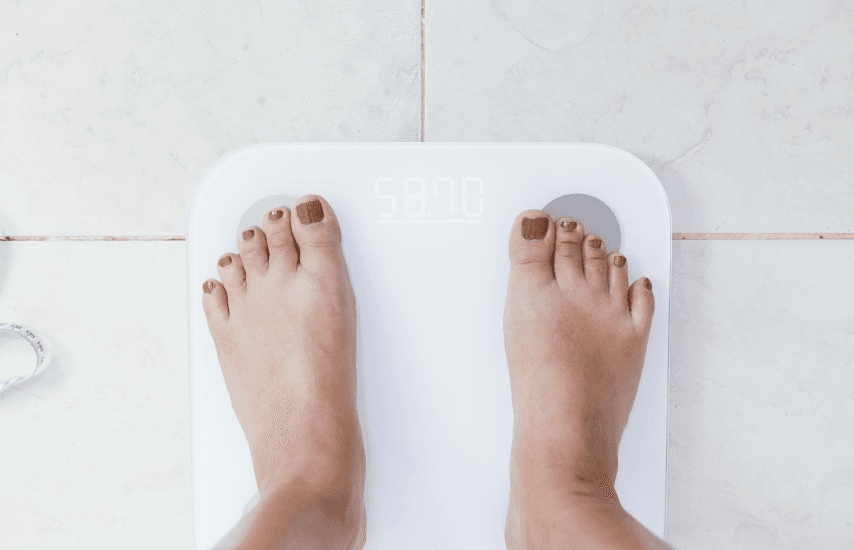
This is what creates the yo-yo cycle: short-term weight loss followed by even more weight gain. And each time, the bounce-back gets bigger and harder.
Why?
Because restrictive dieting increases cortisol, disrupts insulin function, and trains your metabolism to slow down in defense.6
You’re left hungry, tired, and more insulin resistant than before, even if the scale moves a little at first.
That’s why so many women feel like nothing works.
Because what they’re doing isn’t wrong – it’s just working against a system that’s already out of balance.
If you’ve felt this, you’re not imagining it. Your body isn’t broken. But it is asking for something different.
5 Common Mistakes That Disrupt Blood Sugar (and Keep You Overweight)
After working with hundreds of women in menopause, here are the most common habits that quietly disrupt blood sugar and stall weight loss progress:
1. Skipping Breakfast
Many women think skipping breakfast will reduce calories. But after 40, it often comes with consequences.
Your metabolism slows in response, and your body compensates later in the day – with bigger glucose spikes and more intense cravings.
You end up storing more fat, not less.
2. “Healthy” Snack Bars and Smoothies
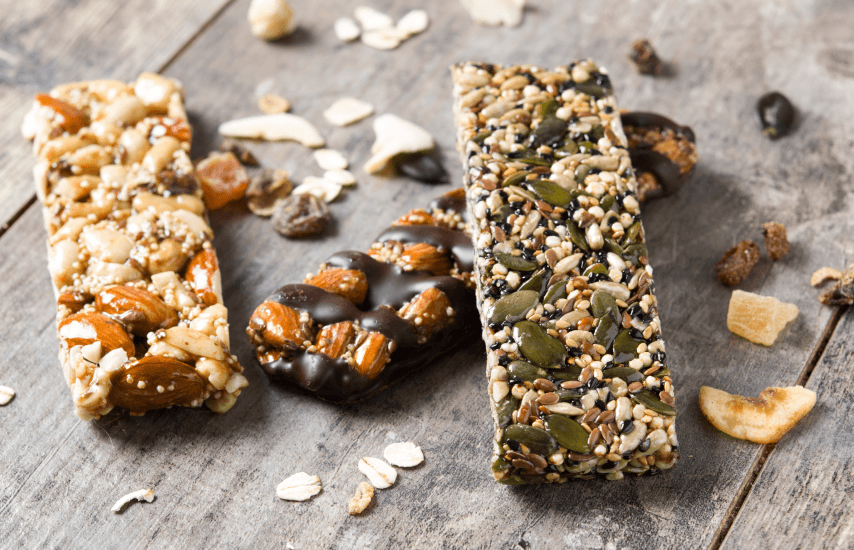
Even so-called healthy options like granola bars or green smoothies can be packed with sugars, fruit juices, or syrups.
These hidden carbs spike your blood sugar and most women don’t even realize they’re sabotaging their insulin balance with every bite.
3. Over-snacking
Many of us grew up believing in eating small meals all day. But constant snacking keeps insulin elevated all day.
That means your body never gets the chance to switch into fat-burning mode – it’s always in fat storage mode instead.4. Late-Night Eating
Your body becomes more insulin resistant in the evening.
Even a light snack after dinner can cause a bigger blood sugar response – and a bigger fat-storage signal.
This is especially common in women who feel too tired to eat well during the day and overcompensate at night.
5. Following Generic Diet Plans
Most diets aren’t made for women in menopause.
They don’t consider hormone shifts, metabolic slowdown, or insulin resistance.
A plan that worked at 30 might completely backfire at 50 – especially if it leaves you tired, undernourished, and stuck in a cycle of restriction and rebound.
If you’ve been doing any of these and still can’t lose weight, it’s not your fault.
You’re just not eating in a way that supports blood sugar stability.
What I Started Doing Differently With My Patients
When I realized how central blood sugar is to menopausal weight gain, I changed how I treat it.
Instead of restrictive diets or calorie tracking, I focused on something else: eating to regulate blood sugar and support hormone balance.
Once we do that, everything starts to improve:
✅ More consistent energy
✅ Better sleep
✅ Fewer cravings
✅ Mood stability
✅ And yes – weight loss without extreme dieting, workouts, or pills
I looked at dozens of eating approaches, studied research, and tested them with real women.
There was one eating style that kept showing up in both studies and success stories:
The Mediterranean Diet.
But not the wine-and-cheese version you see on many social media platforms.
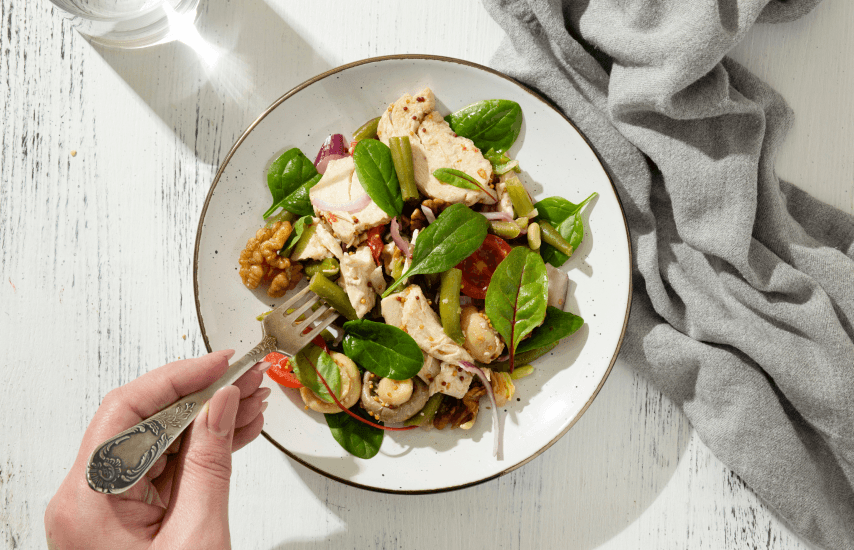
I’m talking about the real Mediterranean approach – full of fiber-rich vegetables, healthy fats, lean protein, and slow-digesting carbohydrates.
This way of eating improves insulin sensitivity, lowers post-meal blood sugar spikes, reduces inflammation, and supports cortisol balance.
It’s balanced, realistic, and sustainable – especially for women 45 and beyond.
Why I Decided to Recommend a Full Plan (Not Just Rules)
At first, I tried giving my patients a simple set of rules:
"Eat more protein. Balance your meals. Don’t skip breakfast."
But time and time again, they’d come back overwhelmed.
"What exactly should I eat?
How do I put this together?
Should I be tracking my calories?
How many calories should I eat a day?
What about fasting? Is fruit okay?"
The truth is – when your hormones have shifted, and your metabolism feels unrecognizable, even good advice can feel impossible to follow.
That’s when I realized: these women didn’t need more scattered tips.
They needed structure, simple, easy to follow, and enjoyable plans.
So, I started looking for a solution that could bring everything together.
Meal planning, blood sugar support, hormone-friendly foods, progress tracking. I wanted to find something that would meet women exactly where they are.
And that’s when I found the one program that finally delivered.
I tested it with a few of my most frustrated patients – women who had tried everything and felt completely defeated.
Within weeks, they were losing weight easily. But even more than that, they were feeling better:
No more bloating after meals.
Clearer head, fewer mood swings.
Energy that lasted all day.
Clothes fit better – without hunger, calorie counting, workouts, or extreme diets.
That’s when I knew: this wasn’t just another program. It was the missing piece for women dealing with cortisol-blood sugar-insulin resistance issues after 40.
The Plan That Made It Simple (and Personal)
That’s why I now recommend a program called no.Diet.
It’s a Mediterranean-style plan that’s personalized to your age, lifestyle, and health goals.
It starts with a 1-minute quiz that builds your plan around you, including blood sugar-stabilizing meal plans, easy recipes, progress tracking, and expert tips to support metabolism.
There’s no calorie counting. No unnecessary stress.
And within just 2-4 weeks, most of my patients reported less bloating, steady weight loss, stable moods, and fewer cravings.
One of them lost 31 lbs in 4 weeks without going to the gym once.
And guess what? It didn’t surprise me.
When you stop the blood sugar rollercoaster, your body starts to let go of stored fat. That’s when real weight loss becomes possible.

If you’re in your 40s, 50s, 60s, or 70s and struggling with stubborn weight, stop blaming yourself.
Your metabolism has changed, and that’s completely normal.
But the key to losing weight isn’t eating less anymore. It’s not starving yourself.
It’s just eating in a way that’s outsmarting your body. And with no.Diet, most of my patients lost the weight effortlessly, without ever feeling hungry or giving up the foods they love
So, do you want to stay in the yo-yo cycle?
Or would you rather protect yourself from risk of heart disease, dementia, type 2 diabetes, and rapid aging… while also losing weight?
Your body can still change.
You just need to support it the right way.
Take This 1-Minute Quiz to Get Your Personalized Mediterranean Diet Plan for Women in Menopause
START NOW
Results may vary from person to person.
Comments
(6)Leave a comment
Your email will not be published. All fields are required.