Take the FREE 2-Minute Quiz to Find Your Procrastination Pattern
START NOW
Harvard Neuroscientist Explains Why Neurodivergent Brains Can't Clear the Clutter – And The 5-Minute Daily Method That's Finally Changing Everything For Women Over 40
- The More You Force It, The More Stuck You Get
- Here's How You Know If This Is What's Happening To You
- What The Neurodivergent Brain Actually Needs
- It Starts With A Free Quiz – Because Not Every Neurodivergent Brain Gets Stuck The Same Way
- What I've Seen With My Own Clients – And What Finally Changed Everything
- Why Women With Neurodivergent Brains Haven't Heard About This
- This 2-Minute Quiz Identifies Your Specific Pattern – And Gives You Your First Exercise Immediately

👉 If you know exactly what you need to do – and still can't make yourself do it
👉 If you've been called lazy your whole life, when you know that isn't true
👉 Or if your brain never seems to slow down, while your home keeps falling further behind
There are two things you must know.
I’m Dr. Ann Collins, and I’ve spent 18 years at Harvard University researching why neurodivergent brains – ADHD, anxiety, chronic overthinking – struggle specifically with getting started and following through, even when the motivation is genuinely there.
First of all, you’re not lazy.
What you have is a brain that needs a different kind of signal to initiate a task than most brains do. That signal isn't willpower, wanting it badly enough, or a better morning routine.
And not having that signal isn’t a personal failure.
It is neuroscience, and it can change.
The More You Force It, The More Stuck You Get
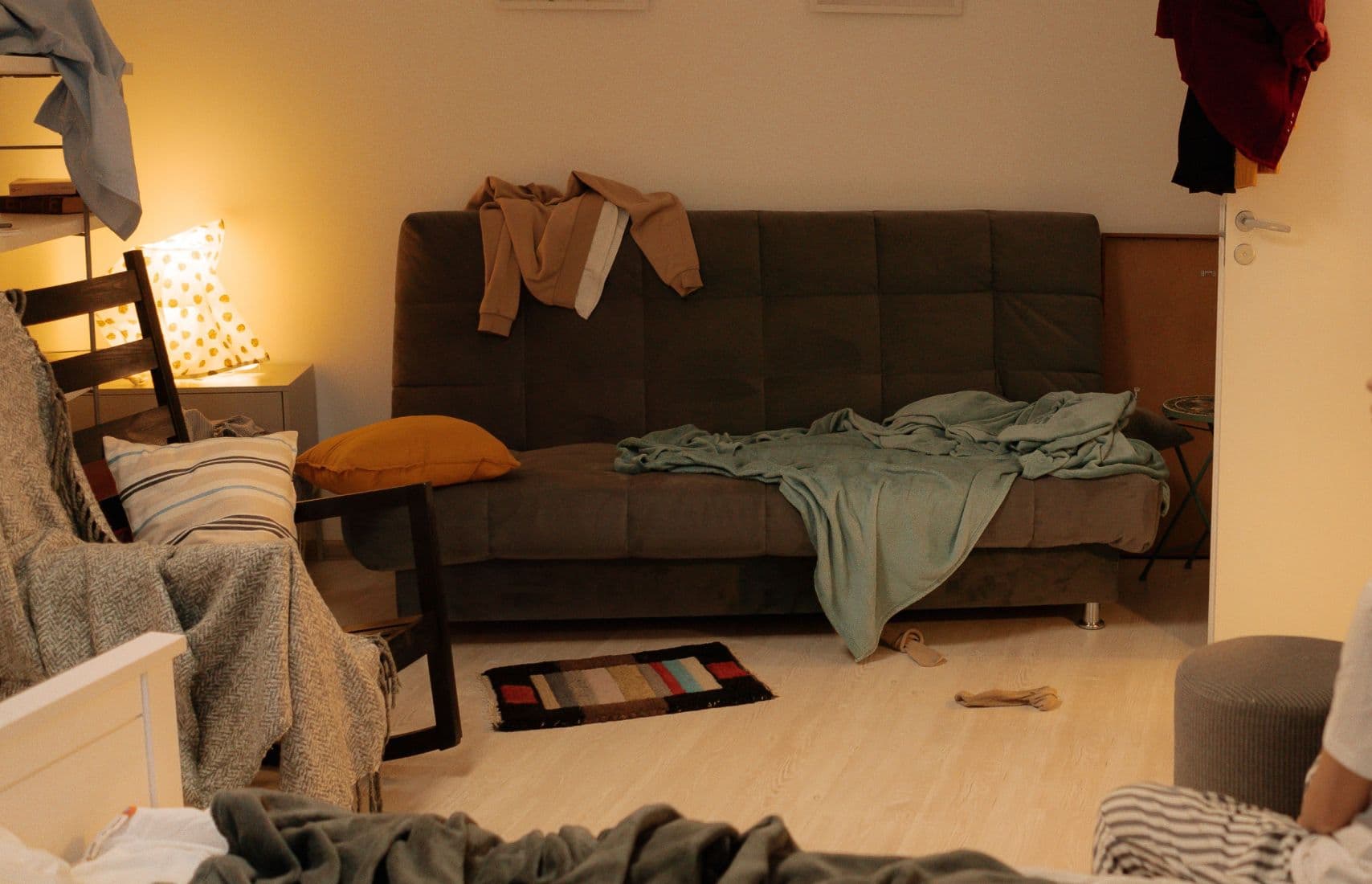
Let’s say it’s Sunday afternoon.
The day you told yourself you’d finally deal with the pile on the kitchen counter, the inbox, the closet that barely closes.
You sit down. You look at it. And just don’t do it.
You're on your phone.
You're cleaning something that didn't need cleaning.
You're making a list of all the things you need to do instead.
By evening, nothing has moved. And the shame keeps getting heavier.
That's a neurodivergent brain running exactly the pattern it was wired to run.
And the more pressure you put on yourself to just start, the worse it gets.
Pressure doesn't create the signal a neurodivergent brain needs to initiate. It creates resistance.
Most women with neurodivergent brains have tried to fix this by trying harder. More discipline. Stricter systems. Earlier mornings.
It doesn't work – because the problem was never effort. It was always signal.
Here's How You Know If This Is What's Happening To You
👉 You spend entire days planning to start something, then procrastinate actually doing it
👉 You perform brilliantly when there's a real deadline, and barely function when there isn't
👉 You could organize a friend's home in an afternoon, but yours has been in chaos for months
👉 Everyone who works with you thinks you're sharp and capable, everyone who lives with you thinks you're disorganized
👉 Starting things isn't the problem. Finishing them is. It feels like pushing through wet concrete.
👉 You think about the task so long that the thinking becomes its own form of avoidance
👉 You feel a gap between who you know you are and what your space shows
👉 You've tried every system, every app, every productivity trend – and two weeks later you're back where you started
This is not who you are.
It is a specific pattern in how your brain was wired – and specific patterns can be specifically fixed.
What The Neurodivergent Brain Actually Needs
Most brains get an internal “green light” signal when it's time to begin something.
Neurodivergent brains produce that signal inconsistently.
Or not at all – when tasks feel low-urgency, vague, or unpleasant.
You wouldn't blame a light bulb for not turning on if the switch wasn't connected. The bulb works perfectly, it just hasn't received the signal it needs.
That's the neurodivergent brain in front of a pile of laundry.
It needs something so small, so immediate, so low-stakes that the brain's resistance doesn't have time to fire.
My team spent years building a method around exactly this.

Small daily micro-initiations, rooted in Cognitive Behavioral Therapy, each one designed to build momentum until starting things becomes the new default.
Once a neurodivergent brain is moving, it keeps moving.
Getting started is the only real barrier.
Everything after that first action is available to it.
We tested this with 154,000 women. 82% were completely free of chronic procrastination and clutter within 4 weeks. Five to ten minutes a day.
My team built it into a daily app called Brainway.
It Starts With A Free Quiz – Because Not Every Neurodivergent Brain Gets Stuck The Same Way
One woman spends the whole day intending to start and never does.
Another starts five things before lunch and finishes none of them.
Another gets everything done, but only when the deadline is hours away and panic has finally kicked in.
They'd all describe themselves as procrastinators. But what's happening in each brain is completely different. And what each brain needs to change is completely different too.
Here is what the quiz looks for:
👉 The Initiation-Blocked Brain
You know what needs doing. You want to do it. You simply cannot make yourself begin. The distance between deciding to start and actually starting feels enormous.
👉 The Overthinker's Spiral
By the time you've thought through every way to approach the task, every possible outcome, every reason to start – the energy to actually do it is gone.
👉 The Deadline Brain
Without the sense of urgency, you’re stuck. You've done your best work the night before something was due, and spent the three weeks before that doing almost nothing.
👉 The Interest Filter
You can lock in for hours on something that genuinely interests you. Something that doesn't? You can't get six minutes into it, regardless of how important it is.
👉 The Anxiety Avoider
The task itself seems manageable from a distance. The closer you get, the heavier it feels – until starting it seems almost impossible. Anxiety becomes avoidance.
👉 The Perfectionism Paralytic
Starting means risking doing it wrong. And doing it wrong – even slightly – feels unacceptable. So not starting feels safer.
Whatever your pattern, generic productivity advice simply won’t work for you.
Two minutes. The quiz finds your type.
Your first exercise arrives immediately – built for exactly how YOUR brain gets stuck, not how brains in general get stuck.
What I've Seen With My Own Clients – And What Finally Changed Everything
The client I think about most often came to me at 44. Smart, successful, held everything together at work.
But she hadn't let anyone into her home in over two years.
Not because she didn't want company. Because the shame of what her home had become was something she couldn't let anyone see.

We started with something almost ridiculously small.
Her first exercise was to walk to one thing she'd been avoiding. Don't move it. Don't decide anything about it. Just go stand next to it.
She texted me that night.
"I stood next to it. Then I picked it up. Then I didn't stop for forty minutes."
Initiation happened. The first three seconds.
And once those three seconds existed, everything after them was available to her.
Six weeks later, she was inviting her family over for dinner every Sunday.
That's a neurodivergent nervous system that finally got the right signal – and learned, for the first time, that initiation doesn’t have to carry a heavy mental load.
Why Women With Neurodivergent Brains Haven't Heard About This
The entire productivity industry was designed with neurotypical brains in mind.
A brain that can easily do tasks, but is simply a bit disorganized.
When those methods don't work for a neurodivergent brain, the conclusion you draw is that you are the problem.
You aren’t. This industry is.
Brainway wasn't built for productivity. It was built for the brain that has everything – capability, intelligence, genuine desire – except the one signal that makes any of it accessible.
And when we look at other methods:
Traditional therapy: $200+ a session, months before real change.
ADHD coaching: $400+ a session, and rarely covered by insurance.
Productivity courses: $497, abandoned within two weeks.
Brainway costs a fraction of any of those.
And unlike every system that left you feeling like a failure when it stopped working, this one was designed for the brain you actually have.
This 2-Minute Quiz Identifies Your Specific Pattern – And Gives You Your First Exercise Immediately
Click below.
A few questions about how your brain specifically gets stuck – not procrastination in general, but yours.
Then it identifies your pattern from the six types and gives you your first exercise immediately.
5 minutes a day. That's it.
Within 30 days, you'll join the 82% who are free of the task paralysis that has followed them for most of their lives.
No willpower. No system designed for someone else's brain. No more being told you just need to try harder.
Just the right signal, finally, for the right brain.
Take the FREE 2-Minute Quiz to Find Your Procrastination Pattern
START NOW
Results may vary from person to person.
Comments
(7)Leave a comment
Your email will not be published. All fields are required.