Take This FREE 3-Minute Quiz and Discover Your Overthinking Type
START NOW
Why Mindfulness Apps Failed For 73% of Overthinkers (Until Japanese Neuroscientists Discovered The Real Problem)
- The Café in Tokyo That Made Me Question Everything About Myself
- Tokyo University Brain Imaging Study Showed "Rumination Loops" In 73% Of Chronic Overthinkers
- My First Micro-Task Took 90 Seconds And Trained My Brain To Stop Spiraling
- I Stopped Asking "What If Everything Goes Wrong?" After Just 7 Days Of 5-Minute Prompts
- Week 3: My Brain Rewired How I Handled EVERYTHING, Not Just My Anxious Thoughts
- By Week 4, My Brain's New Patterns Felt Automatic (No Willpower Required)
- Traditional Methods Focus On Calming Thoughts – This App Rewires The Neural Pattern That Creates The Spiral
- Beyond The Quiet Mind: Better Sleep, More Energy, And Relationships That Actually Functioned
- Here’s What Other Users Are Saying:
- Why Most People Haven't Heard About This
- This 2-Minute Quiz Reveals YOUR Specific Overthinking Pattern (And The Exact Fix For It)

154,200 Chronic Overthinkers Stopped Spiraling In 30 Days Using This Japanese "Brain Trick"
I spent three years trying every method to stop overthinking.
Meditation apps. Journaling prompts. Gratitude practices. Therapy exercises that promised to "rewire my anxiety."
My mind was quiet for exactly 11 days.
Then the spiral crept back in.
Replaying conversations. Catastrophizing small things. Analyzing every text. Creating worst-case scenarios about everything.
The worst part?
Everyone thought I had it together.
Georgetown degree. Good job. Confident exterior when people were around.
But behind closed doors? My mind was a war zone.
The Café in Tokyo That Made Me Question Everything About Myself
Last year, my company sent me to Japan for a conference.
I stopped at a small café in Tokyo. Just a regular spot for locals.
And I couldn't stop staring at the people around me.
Some of them were reading a book. The others were simply sipping their coffee.
Not checking their phone. Not fidgeting. Not looking around anxiously.
Completely present.
I realized I hadn't been able to just sit like that in years. My mind was always racing. Always planning. Always worrying.
Over the next week, I noticed this everywhere. People on trains. In parks. At coffee shops.
The Japanese weren't avoiding stress. They weren't living simpler lives than Americans.
They were just... different somehow.

Tokyo University Brain Imaging Study Showed "Rumination Loops" In 73% Of Chronic Overthinkers
A colleague introduced me to Dr. Yuki Tanaka, who studies cognitive neuroscience at Tokyo University.
Dr. Tanaka explained something that made my jaw drop:
"When we scan the brains of chronic overthinkers, we don't see an anxiety problem. We see specific neural patterns that create what we call 'rumination loops.' Your brain gets stuck in a cycle."
She pulled up brain imaging studies on her laptop.
The non-overthinker's brain showed clear, distinct neural pathways when processing thoughts.
The chronic overthinker's brain?
Lit up like a tangled mess of Christmas lights. Multiple pathways firing at once. The brain trying to process a thought but getting caught in endless loops.
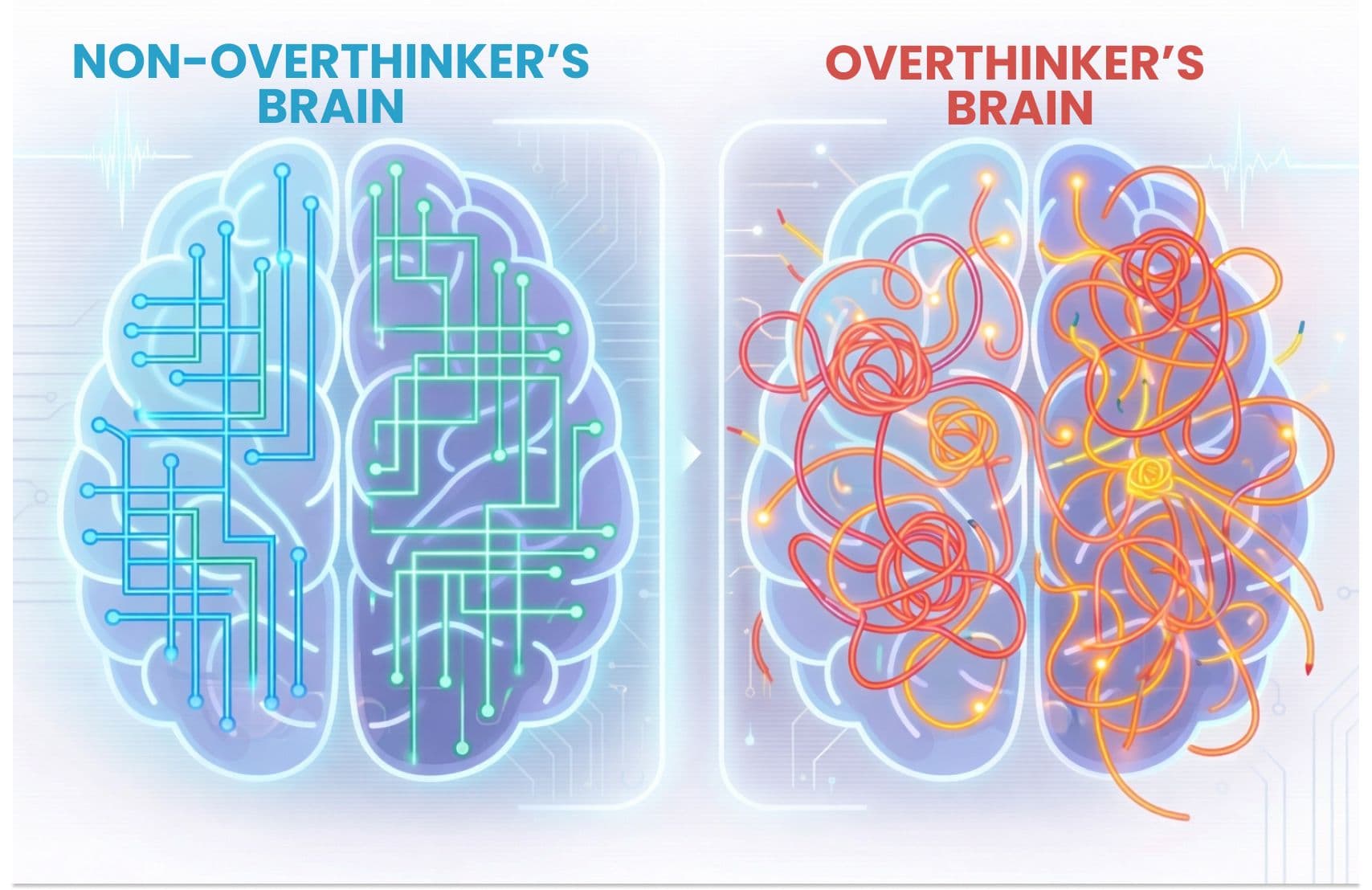
"This is why meditation apps don't fix the problem," Dr. Tanaka continued. "Your thoughts aren't the problem. The way your brain processes those thoughts – that's the problem."
She explained that Japanese neuroscientists had spent 12 years developing a solution based on Cognitive Behavioral Therapy and neuroscience.
Not the kind where you sit in an office and talk about your childhood.
Micro-interventions. Five-minute exercises that interrupt the brain's rumination loops and create new neural pathways.
"We tested it on 154,200 people," she said. "87% showed dramatic reductions in overthinking within 30 days."
She showed me the app her research team had helped develop.
It looked simple. Almost too simple. Just a daily lesson and a few quick exercises.
"Five to ten minutes a day," Dr. Tanaka said. "That's all it takes to rewire the patterns."
The research data caught my eye: 81% of users were completely free from chronic overthinking after just 4 weeks.
That night, I downloaded it.
My First Micro-Task Took 90 Seconds And Trained My Brain To Stop Spiraling
Day 1 was weird.
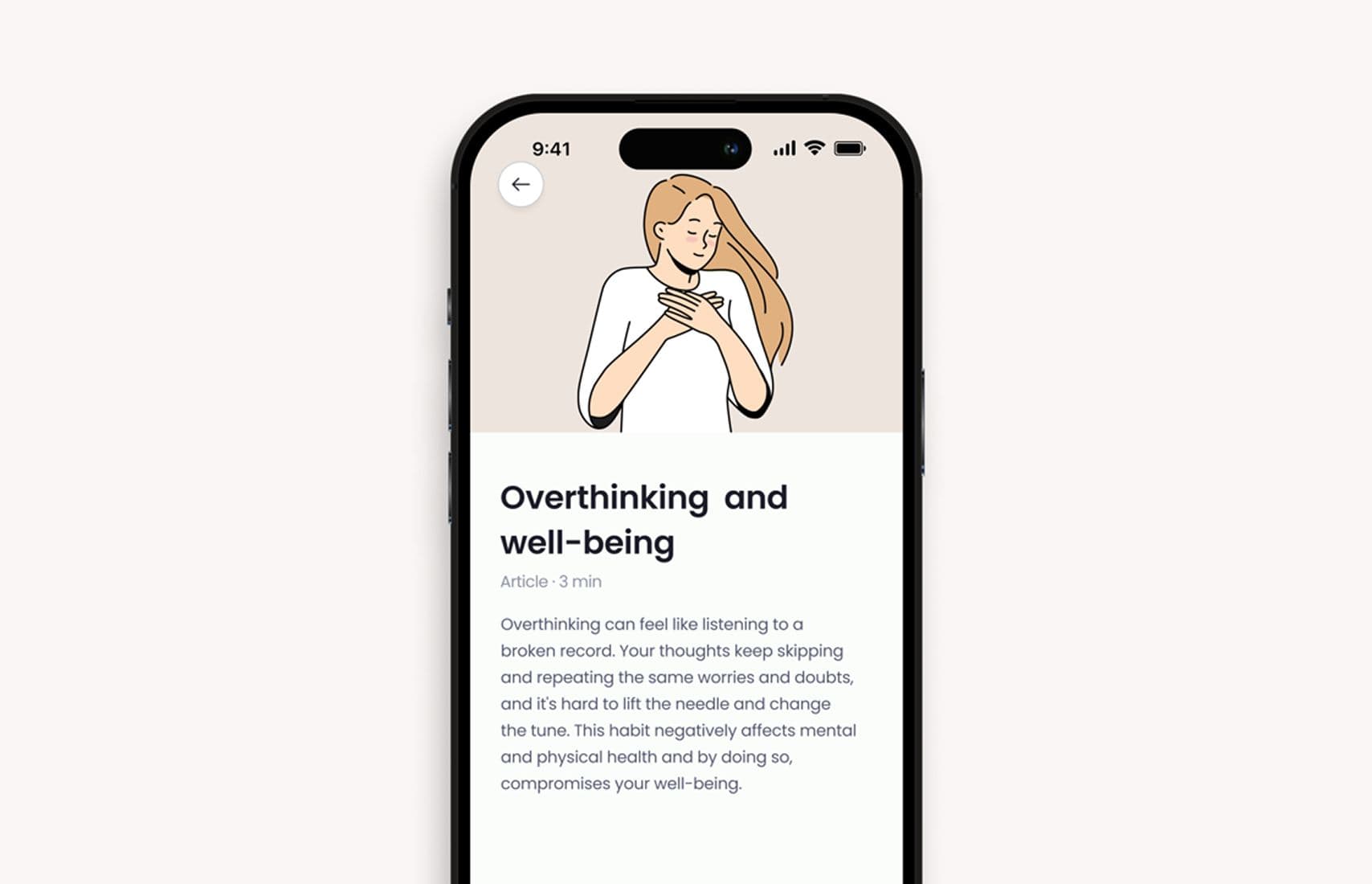
The app asked me three simple questions about my overthinking triggers. Then it gave me one task: "Notice three thoughts. Label them. Let them pass."
That's it. Three thoughts. Took me 90 seconds.
But the app explained WHY I was doing it.
It wasn't about the three thoughts. It was about training my brain to observe without spiraling.
"Your brain learns new patterns," the lesson said. "Not from suppressing thoughts. From tiny mental shifts repeated consistently."
Day 3, something clicked.
I woke up to a notification: "Your brain is ready to break the pattern. Here's your 5-minute prompt."
Today's lesson was about "thought loops" – why my brain kept replaying the same worries over and over.
The exercise: "Write down one recurring worry. Ask yourself: Is this thought useful right now? If no, set it aside."
I picked my biggest spiral: worrying my boss was disappointed in me because of one unfinished project.
I wrote it down. Asked the question. Realized it wasn't useful.
Five minutes later, I felt completely unbothered by it.
For the first time in months, I felt like I could breathe.
I Stopped Asking "What If Everything Goes Wrong?" After Just 7 Days Of 5-Minute Prompts
Every morning, the app gave me one tiny mental exercise. Never more than 10 minutes.
"Identify three catastrophic thoughts and challenge them."
"Notice when you're replaying a conversation and redirect."
"Name five things you can see right now."
My mind still raced sometimes.
But something was happening in my brain.
I stopped spiraling when a text came in. I stopped creating disaster scenarios about minor mistakes.
The app tracked my completion rate. Seeing that streak build – 7 days, 10 days, 14 days – became addictive.
Week 3: My Brain Rewired How I Handled EVERYTHING, Not Just My Anxious Thoughts
By week three, I wasn't even thinking about it anymore.
The app would ping. I'd do the exercise. Done.
But the results were piling up.
My mind stayed calmer. I stopped overanalyzing every conversation. I could actually enjoy moments without worrying about what came next.
Then something unexpected happened.
I got a promotion at work.
My boss said I'd "really stepped up" in the last month. More decisive. Faster responses. Less second-guessing.
I realized the app wasn't just fixing my overthinking. It was rewiring how my brain handled everything.

By Week 4, My Brain's New Patterns Felt Automatic (No Willpower Required)
The overthinking just... stopped.
Not because I was working harder. Not because I'd finally found the "perfect meditation technique."
My brain had learned new patterns. Patterns that felt automatic now.
I'd notice a worry starting and just let it go. No internal debate. No 30-minute spiral.
The app's weekly check-in asked: "How much mental energy are you spending on overthinking?"
Week 1, I'd answered "constant exhausting noise."
Week 4? "My mind is actually at peace most of the time."
Traditional Methods Focus On Calming Thoughts – This App Rewires The Neural Pattern That Creates The Spiral
Overthinking isn't a discipline problem.
It's a neurological pattern problem.
Your brain creates shortcuts – neural pathways – for repeated behaviors. The more you overthink, the stronger that pathway gets.
Traditional mindfulness apps fail because they focus on the SYMPTOMS (anxious thoughts, racing mind).
But they don't address the neural pattern that created the spiral in the first place.
CBT-based micro-interventions work differently.
They interrupt the old pattern and build a new one. Five minutes at a time. Every single day.
Most people try to meditate their way out of overthinking in one weekend. Their brain freaks out. The old patterns come roaring back.
This app gives you tiny wins. Daily.
Your brain learns: "Oh, I don't need to overthink to feel safe."
That becomes the new pathway.
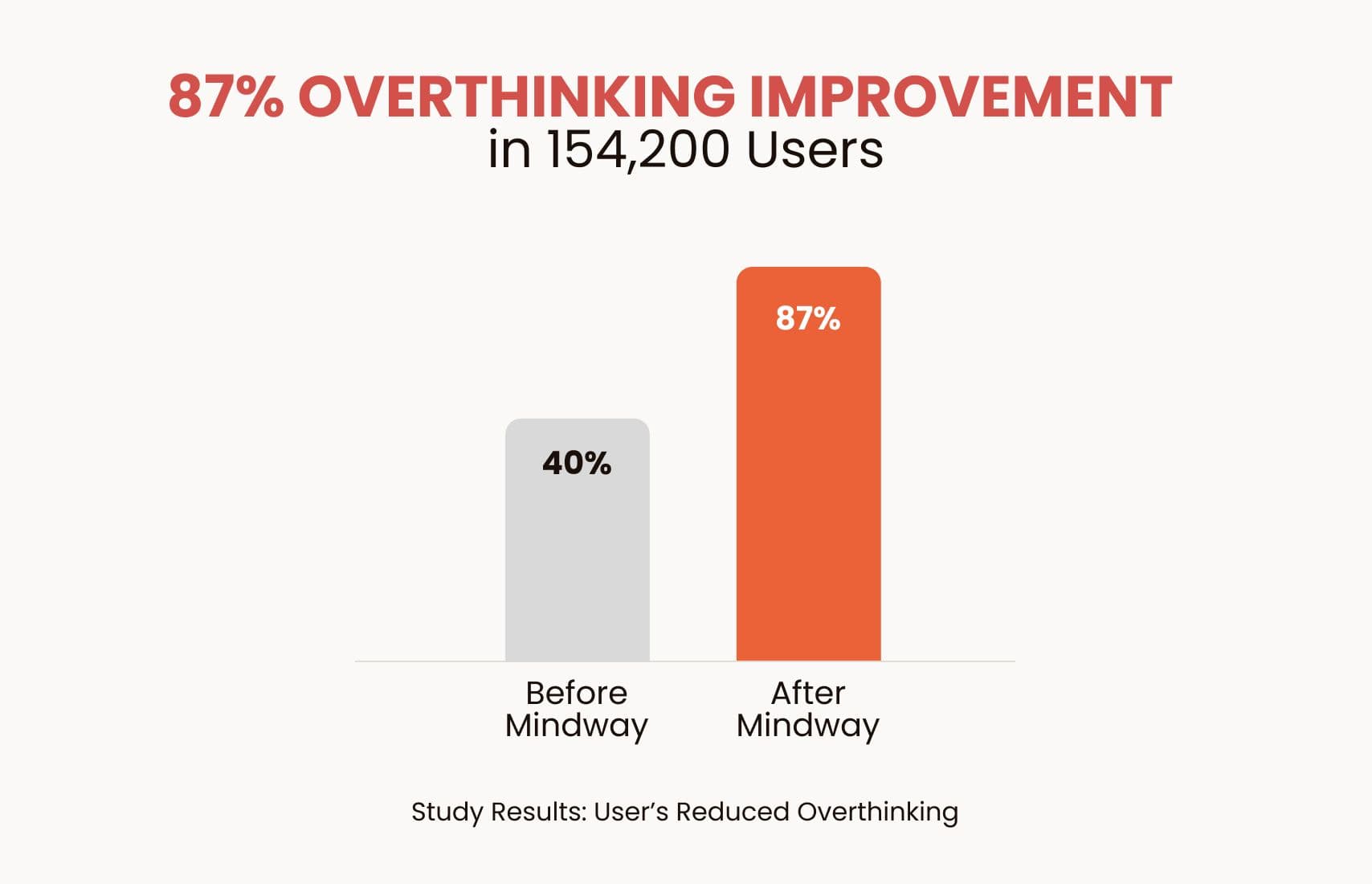
Within 30 days, 81% of users are completely free from chronic overthinking.
That statistic blew my mind when I first heard it.
Now I'm living proof.
Beyond The Quiet Mind: Better Sleep, More Energy, And Relationships That Actually Functioned
I thought I'd get a calmer mind.
I got that.
But I also got my first promotion in three years.
Better relationships (I don't overanalyze every text now).
More energy. Better sleep. Actual peace in quiet moments.
The most surprising part? Other people noticed.
My mom: "You sound different. More... present, I guess?"
My best friend: "You're not constantly in your head anymore. What changed?"
All from 5-10 minutes a day with an app.
Here’s What Other Users Are Saying:
"I usually give up on things pretty easily, but this time I stuck with it. And I'm so glad I did. This plan helped me stop overthinking and finally helped me feel secure in my relationship."

"It's so much more than just a plan. The plan is great, but it's the reassurance, support and community that has helped me break free from constant anxiety."

"It only takes 5-10 minutes each day, but it makes me feel so much more mentally clear and present."

Why Most People Haven't Heard About This
The app comes directly from the research team - no middlemen, no corporate investors.
Think about what most people spend trying to fix this problem:
Traditional therapy: $200+ per session, weekly commitments for months.
Meditation courses: $497, temporary results.
Anxiety coaching: One-time strategies that don't rewire the patterns.
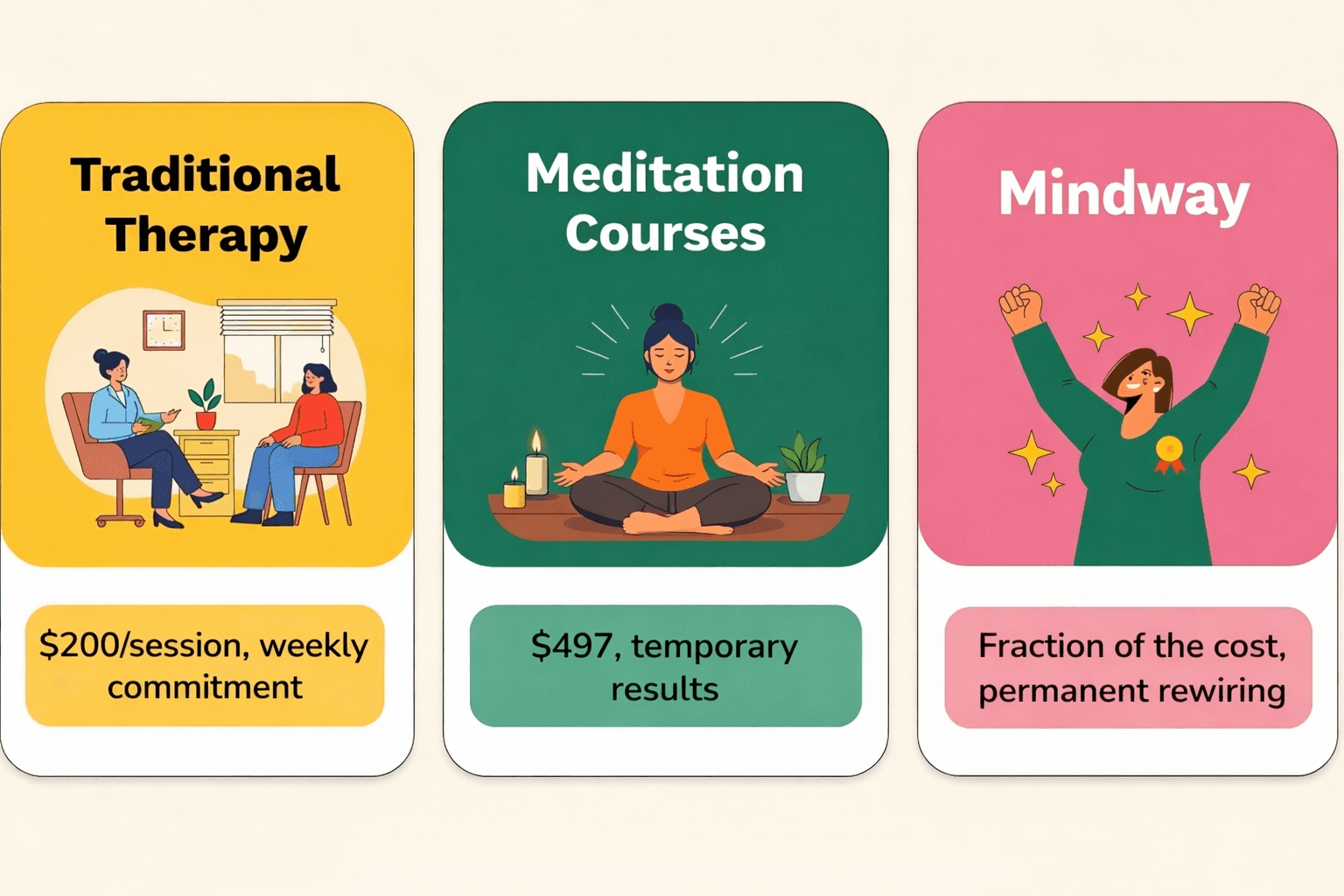
Mindway costs a fraction of those options.
And unlike one-time fixes that fade, this actually retrains your brain permanently.
Right now, they're running a major discount for new users.
But when they hit capacity, the discount ends.
This 2-Minute Quiz Reveals YOUR Specific Overthinking Pattern (And The Exact Fix For It)
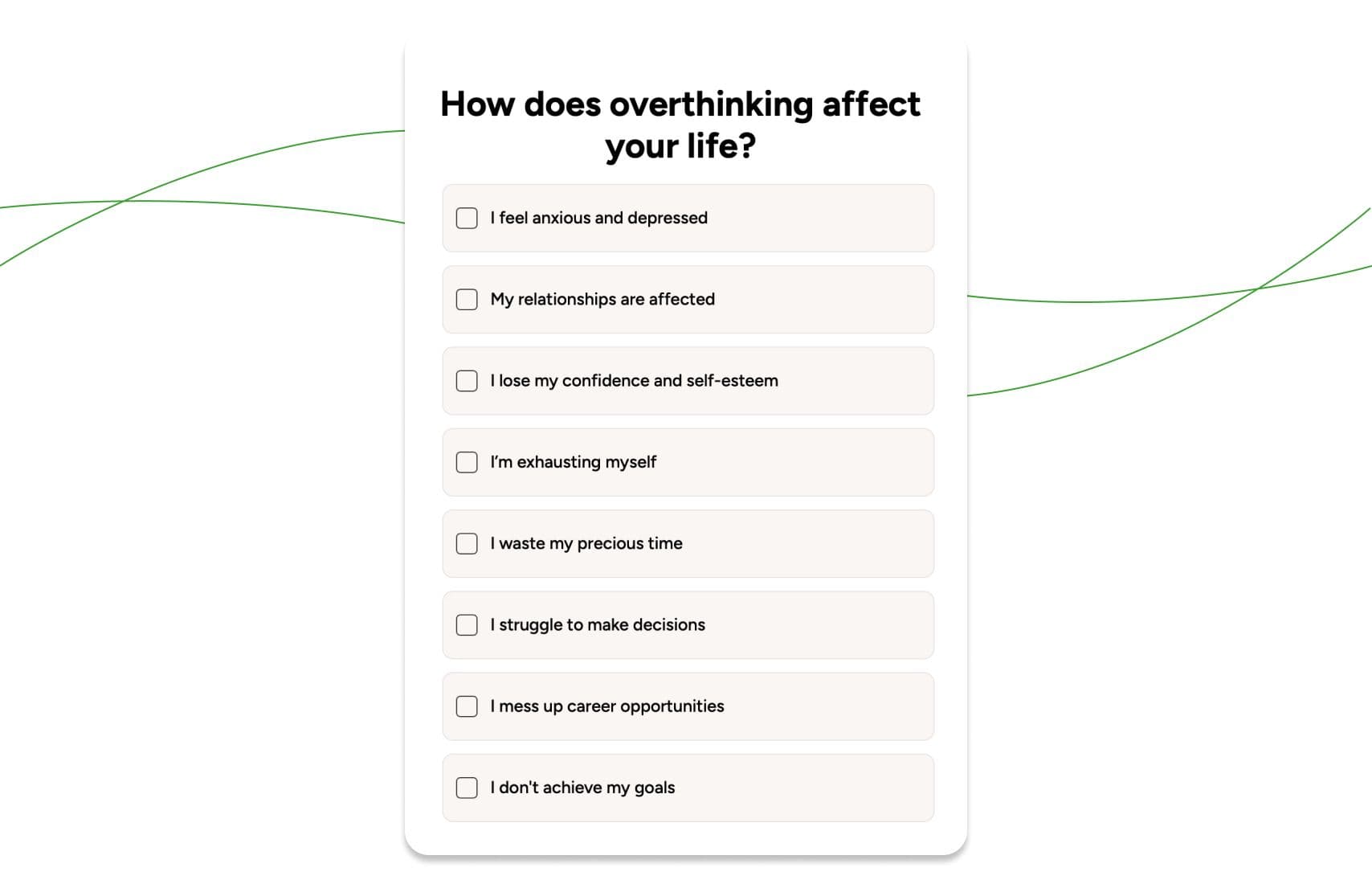
Click the button below.
The quiz will ask you a few simple questions about how your mind spirals and what triggers your overthinking.
Then it identifies your specific overthinking type.
(Most people tell me this part alone was eye-opening. Finally understanding WHY they'd struggled for so long.)
After that, you get immediate access to the app with your personalized program.
The one designed specifically for how your brain is wired.
5 minutes a day. That's it.
Within 30 days, you'll be part of the 81% who are completely free from chronic overthinking.
No willpower required. No massive lifestyle overhaul.
Just new neural pathways that actually stick.
Take This FREE 3-Minute Quiz and Discover Your Overthinking Type
START NOW
Results may vary from person to person.
IMPORTANT: The major discount is only available while they have capacity for new users. Last time they offered this, it sold out in 72 hours. Don't wait.
Comments
(4)Leave a comment
Your email will not be published. All fields are required.