Take a Quick Quiz to Get Your Personalized Anti-Procrastination Plan!
START NOW
Neuroscientist: Procrastination Isn’t Laziness or Poor Time Management – It’s Stress, Anxiety, and Emotional Overload
- "Even behavioral therapists struggle with the real cause of procrastination."
- "Here's why willpower and discipline don't work."
- Connection between procrastination and your brain's emotional response
- The common (in)effective ways to manage those emotions and eliminate procrastination
- "This approach to emotional regulation turned out to do wonders"
- "Curious about its potential, I introduced it to a few of my clients."

"Procrastination leads to stress, missed deadlines, and overwhelming guilt.
But beating yourself up about it only makes things worse – because it's not laziness, it's your brain's way of managing uncomfortable emotions," says Dr. Margaret Allen, Ph.D. in neuroscience.
Eventually, procrastination leaves you feeling overwhelmed, trapped, and as if you're always falling behind – in your relationships, career, personal growth, self-care, and even at home. It affects every part of your life.
Many people then seek expert advice on time management, planning, and productivity, but the harsh truth is…
"Even behavioral therapists struggle with the real cause of procrastination."
Dr. Allen affirms that this statement comes from her own experience. She spent over 20 years working with some of the sharpest experts in the field.
The neuroscientist has met many top behavioral therapists known for their discoveries.
However, when it came to solving procrastination, even these leading experts struggled to find a lasting solution – because they were treating the wrong problem.

"I want every person to know that:
If you keep putting things off, no matter how important they are…
If you feel anxious just thinking about certain tasks…
If you feel guilty and ashamed about your procrastination…
If you know you need to change, but somehow you always fail…
It's not your fault," explains Dr. Margaret Allen.
"Here's why willpower and discipline don't work."
"When procrastination takes hold, it impacts every aspect of your life," says Dr. Allen.
When procrastination sets in, here's what happens:
You start strong but lose motivation fast
You feel guilty but can't seem to take that first step
You find it hard to stay focused
You keep giving in to distractions
But that's not all.
Scientific research reveals that procrastination isn't about poor time management or laziness – it's about poor emotional regulation.
Studies show that people are more likely to put off tasks that make them feel anxious or threaten their sense of self-worth.
When you avoid these unpleasant tasks, you also avoid the negative emotions – and that feels rewarding in the moment.
This conditions your brain to use procrastination as an emotional coping strategy.

Experts have their take on procrastination.
Instead of exploring the emotional root causes, many experts point to procrastination and tell you to 'stop being lazy' or 'just plan your time better'.
"But here's the issue…
Following advice like this never works.
In fact, it can leave you even more stuck and defeated.
It only adds more frustration, shame, and self-doubt," explains Dr. Allen.
Besides following traditional advice, people literally try everything:
❌ Making endless to-do lists that only leave you feeling even more overwhelmed
❌ Setting strict deadlines and forcing yourself to push through, only to burn out and fall even further behind
❌ Watching one motivational video after another, waiting for a miracle that never comes
"As nothing seems to work, people ask me in desperation, 'What can I do then?'. To answer this question, I had to investigate procrastination much deeper," explains Dr. Allen.
Connection between procrastination and your brain's emotional response
Over the past couple of decades, research has shown that procrastination affects the brain's neural pathways – particularly the regions linked to threat detection and emotion regulation.
And here's where it gets interesting.
Research has found that regions of the brain linked to threat detection and emotion regulation are different in people who chronically procrastinate compared to those who don't.
When you delay tasks, your brain perceives them as emotional threats. This triggers avoidance behavior as a form of self-protection.
Tasks that are emotionally loaded or difficult, such as…
Studying for an exam
Preparing for public speaking
Or tackling a task or project that might be judged
…become prime candidates for procrastination.
People with low self-esteem are more likely to procrastinate, as are those with high levels of perfectionism who worry their work will be judged harshly.
This constant avoidance creates a never-ending loop where the brain avoids tasks that trigger negative emotions.
You seek immediate relief through distractions.
Guilt and shame build up, making the task feel even more threatening.
"That's why so many people feel stuck in procrastination, repeating the same cycle no matter how hard they try," adds Dr. Allen.

The common (in)effective ways to manage those emotions and eliminate procrastination
"The connection between procrastination and emotional regulation intrigued me, so I reached out to a few experts to dive deeper," continues Dr. Allen.
After many conversations, the neuroscientist came up with a list of common approaches to manage emotions:
❌ Positive affirmations – they can boost confidence temporarily, but they don't address the underlying emotional triggers or teach you how to manage anxiety around difficult tasks.
❌ Reward systems – they may work initially, but they train your brain to depend on external rewards instead of building internal motivation and emotional resilience.
❌ Forcing yourself to 'just do it.' – this approach ignores your emotions entirely and often leads to burnout, increased anxiety, and even deeper avoidance patterns.
"It was shocking to find those solutions being ineffective and short-term. But there had to be a fix. And as I later found, there was," explains Dr. Allen.
"This approach to emotional regulation turned out to do wonders"
One day, Dr. Allen was researching the correlation between procrastination and emotional regulation. She accidentally stumbled on one of the procrastination forums.
There was an active discussion about this new anti-procrastination program.
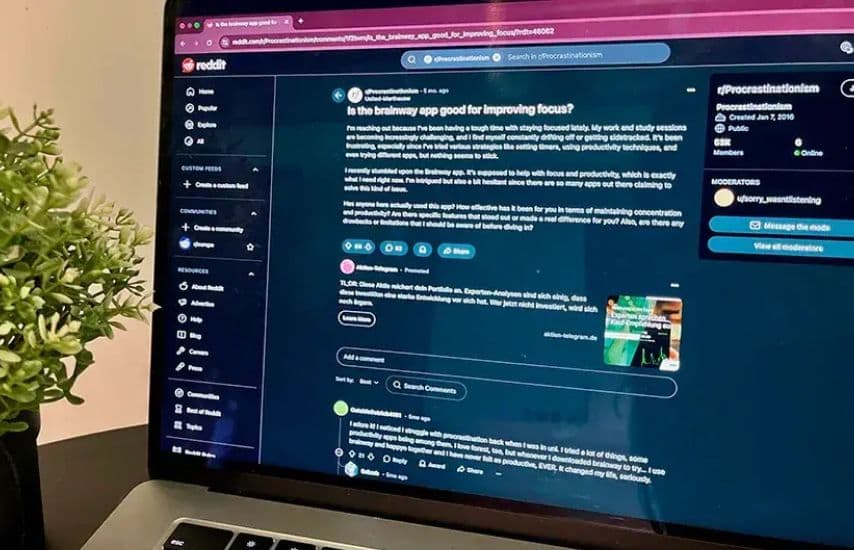
"It wasn't a promotion or sales pitch. It was an honest conversation among people struggling with focus, productivity, and emotional overwhelm.
So, I had no reason to doubt their experiences," she says.
One after another, people on the forum were raving about this program.
They described it as the most effective tool available for helping them understand their emotional triggers, build healthier coping strategies, and finally break free from procrastination.
It was called Brainway.
"I took a closer look at the program. To my surprise, it WAS actually one of the most advanced programs I had come across. Brainway offers a personalized plan to beat procrastination, helps you understand your emotional patterns, build lasting habits, and track progress – all while discovering new ways to maintain focus. It identifies your procrastination type and reveals the root emotional causes.
It didn't seem like just another generic approach; it's a complete system designed to help you manage your emotions better, reduce anxiety around tasks, and eliminate procrastination at its source."
"Curious about its potential, I introduced it to a few of my clients."
"It takes just a few minutes a day to use Brainway. I even started calling it a 5-minute 'emotion reset,'" Dr. Allen smiles.
Within days, Dr. Allen’s clients started reporting significant changes.
"They stopped beating themselves up for procrastinating. Their anxiety around difficult tasks decreased dramatically. They developed healthier ways to manage stress and uncomfortable emotions.
Over the next few weeks, they became more productive, confident, and resilient in handling bigger challenges."
Brainway didn't just help them check off their to-do lists – it completely reshaped how they understood and managed the emotions driving their procrastination.
"It was so amazing to see these people overcome procrastination and transform their emotional wellbeing, focus, and confidence," shares Dr. Allen.
But, as Dr. Allen says herself…
“Don’t take my words for granted, try it yourself.”
Take This 1-Minute Free Quiz to Understand Your Procrastination Type and Finally Beat Procrastination for Good.
Take the Quiz
Results may vary due to personal features
Comments
(5)Leave a comment
Your email will not be published. All fields are required.